
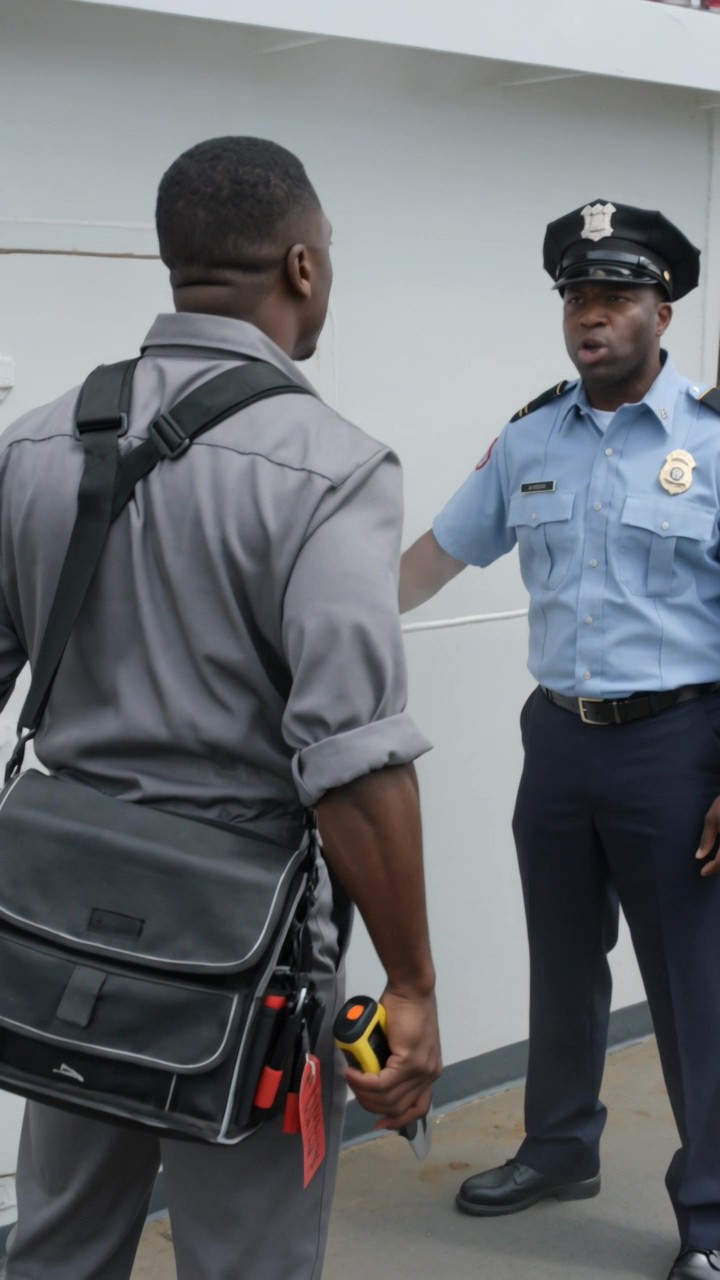
Preston Hale survived.
So did every passenger and crew member on the Harbor Queen.
The fire remained contained to an electrical cabinet near the auxiliary engine room. The smoke was severe enough to force evacuation, but the ferry was still tied to the dock.
The event did not become a maritime disaster.
That made it easier for the company to describe the rescue as an “efficient emergency response.”
Marcus refused that phrase.
The response had not been efficient.
Passengers evacuated safely because crew followed training.
Preston nearly remained trapped because a door Marcus had flagged months earlier would not open after heat distorted the corroded frame.
The same defect that cost Marcus his job nearly cost Preston his life.
At the hospital, Preston asked to see him.
Marcus did not go.
The company’s attorney called.
Marcus did not answer.
A news crew waited outside his small repair shop.
He closed the garage door.
People wanted a clean story:
The fired mechanic returns.
Saves the boss.
The boss apologizes.
The mechanic forgives.
Everyone learns.
Marcus had spent six months losing contracts because Preston called him unreliable. His daughter postponed community college because the family’s income dropped. His wife took extra night shifts at a pharmacy.
One rescue did not erase those months.
Three days later, investigators asked Marcus to give a statement.
He brought the red inspection tag.
The front still read:
REMOVE FROM SERVICE — DOOR MAY JAM UNDER HEAT.
On the back was the note Preston wrote during the termination meeting:
EMPLOYEE REFUSED OPERATIONAL DIRECTIVE.
Marcus had kept it because it captured the entire argument in one object.
He had described a safety risk.
Management had described disobedience.
The investigators examined the hatch.
Corrosion had expanded beneath layers of paint.
The latch assembly had not been replaced.
A maintenance invoice showed cosmetic sanding and repainting, but no structural repair.
Preston attended the interview with his attorney.
His hands still carried minor bandages.
He looked at Marcus.
“I should have listened.”
Marcus answered:
“Yes.”
No comforting sentence followed.
Preston swallowed.
“I thought you were exaggerating to delay the vessel.”
“You knew the door failed the manual test.”
“I believed the crew could use the alternate exit.”
Marcus looked at him.
“You were standing beside the alternate route when smoke blocked it.”
Preston lowered his eyes.
That was the problem with contingency plans used to dismiss primary failures.
Emergencies do not promise to leave the backup route available.
The ferry company suspended Preston.
Then offered Marcus his old job.
Higher salary.
Safety authority.
Public recognition.
He declined.
The chief executive seemed surprised.
“We are trying to make you whole.”
Marcus looked through the office window toward the harbor.
“You cannot return contracts I lost or the semester my daughter postponed.”
“We can compensate you.”
“You can compensate the damage.”
He turned back.
“That is not the same as returning me to the place that caused it.”
Marcus continued his wrongful-termination and retaliation case.
Some people criticized him.
They said he had saved Preston’s life and should now accept the apology.
Marcus answered only once:
“I rescued a person from smoke. I did not rescue a company from consequences.”
The sentence spread widely.
Preston later gave sworn testimony confirming he removed the red tag and pressured the maintenance team to keep the Harbor Queen operating.
His testimony strengthened Marcus’s case.
It also implicated him.
He lost his executive position and faced professional sanctions.
Marcus did not celebrate.
Preston had done the right thing late.
Late truth still mattered.
It did not cancel early harm.
The company settled with Marcus and several mechanics who had experienced similar pressure.
Part of the settlement created an independent vessel-safety office whose director did not report to scheduling or revenue management.
Mechanics could remove equipment from service without the same executive who controlled departures overruling them.
Any override required an outside inspection.
Safety tags were logged and photographed before removal.
Retaliation against a worker issuing a good-faith safety hold triggered external review.
Marcus accepted a position on the independent advisory board.
Not as an employee of the ferry company.
As a paid technical representative selected by mechanics.
His daughter returned to college the following semester.
She asked whether he regretted saving Preston.
Marcus thought for a long time.
“No.”
“Even after what he did?”
“The door did not ask whether he deserved help.”
She frowned.
“That sounds like forgiveness.”
“It is not.”
“What is it?”
Marcus picked up the red tag.
“Knowing who I am before deciding who he is.”
Months later, Preston came to Marcus’s repair shop.
No cameras.
No attorney.
He placed a new emergency hatch latch on the workbench.
“I am teaching a safety course for port managers,” he said. “I wanted to use the old door as a case study.”
Marcus looked at him.
“You want permission?”
“Yes.”
“You have it.”
Preston waited.
“I do not expect forgiveness.”
“Good.”
The answer hurt, but Preston nodded.
Marcus added:
“I expect accuracy.”
The old corroded hatch was removed from the Harbor Queen and installed in the port training center.
The red inspection tag hung beside it.
A plaque read:
A WARNING DOES NOT BECOME WRONG BECAUSE THE PERSON GIVING IT IS INCONVENIENT.
Marcus never returned full-time to ferry maintenance.
His repair shop grew.
Mechanics from nearby ports came to him for second opinions when managers pressured them to clear equipment.
He became known as difficult.
This time, the word meant something different.
Difficult to rush.
Difficult to silence.
Difficult to make sign a lie.
The Harbor Queen returned to service after repairs.
On its first departure, Marcus watched from the pier.
Preston was not on board.
The new safety officer tested the emergency hatch before the vessel left.
It opened cleanly.
Marcus touched the red tag inside his jacket.
The rescue had not restored the old relationship.
It restored something more important:
The warning was finally allowed to remain true.







Leave a Reply