
Atlas was not a magical dog.
He did not understand illegal occupancy, certificate renewals, or electrical codes.
He understood smells, heat, stress, and Thomas Bell’s body.
That was enough to make the adults open a door they had been told to ignore.
Thomas had lived in Alder Court North for nineteen years.
He moved there after his wife died because the building was close to his clinic, grocery store, and bus stop. He was not wealthy, but his rent remained below newer market prices because he had occupied the unit so long.
Charles Whitmore purchased the building two years earlier.
He planned to renovate, raise rents, and advertise “micro-lofts near downtown.” The plan was legal if he followed housing rules, permits, notice periods, and tenant protections.
Charles did not want the slow version.
He began pressuring older tenants to leave.
Noise complaints appeared.
Repair requests slowed.
Lease notices became more aggressive.
Thomas became a target because his apartment was one of the largest remaining rent-stabilized units.
Atlas gave Charles an excuse.
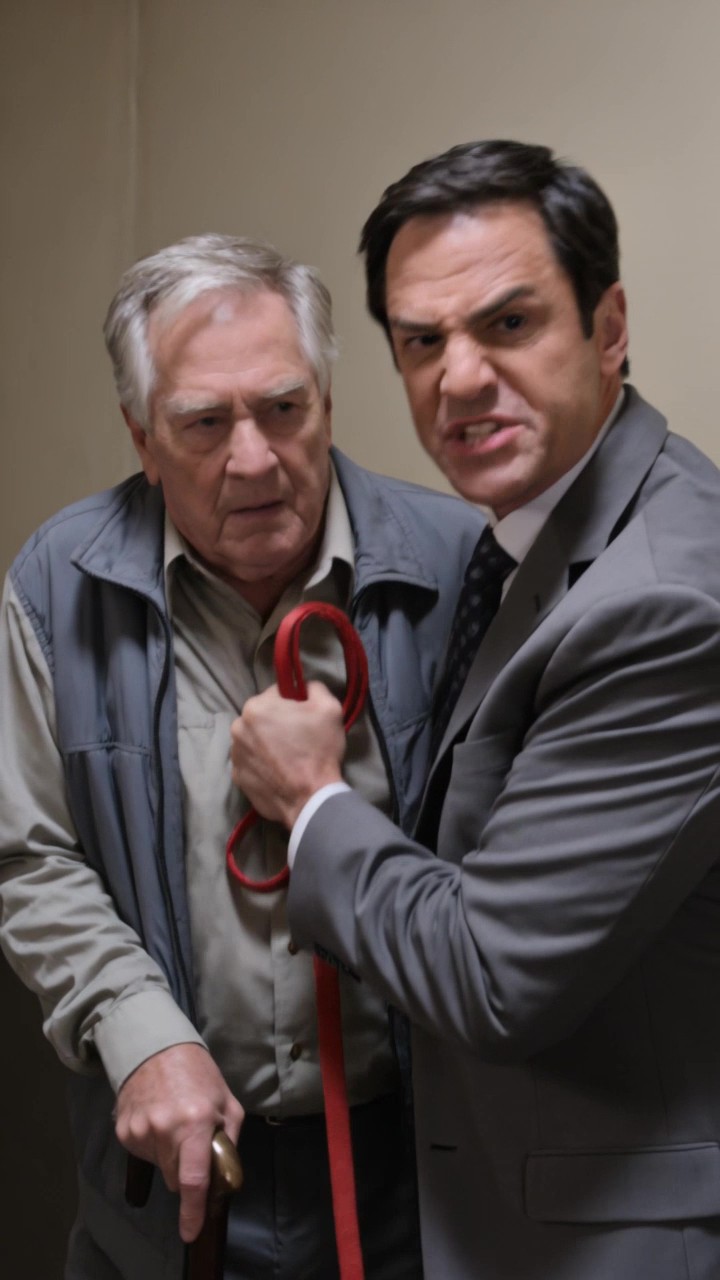
The dog was twelve years old, heavy around the shoulders, and trained to alert Thomas before dizzy spells connected to a heart condition. Atlas was not flashy. He did not wear a polished harness. His red leash was old. His patch had been replaced twice after fraying, and the newest one looked cheap.
Charles questioned the documentation repeatedly.
Thomas provided a letter from his physician and registration from the training organization that originally evaluated the dog. Charles’s attorney claimed the documentation was outdated and demanded removal of the animal during “common-area disputes.”
Thomas tried to comply with every reasonable rule.
Atlas stayed quiet in hallways.
He used the side exit.
He never damaged property.
That did not stop complaints from appearing in the tenant file.
One report said Atlas growled at a contractor.
Another said he barked near the basement.
Maria Alvarez knew why.
Maria cleaned the lobby, trash room, stairwells, and laundry area. She noticed a strange warm smell near the basement vents after Charles’s crews began “renovation work.” The smell was not ordinary dust. It reminded her of overheated plastic.
She filed a maintenance note:
Burning odor near old laundry room. Basement wall warm to touch.
The property manager changed it to:
Cleaning supply odor near service area.
Maria filed a second note after seeing an orange glow through a gap in the plywood partition. She was told contractors used temporary work lights and that she should not enter areas under construction.
The basement had once contained coin laundry, storage lockers, and boiler access.
Charles’s crew built a plywood wall across part of it, claiming a future bike room was under construction. Behind the wall, they had created six windowless sleeping rooms for short-term laborers working on another property.
The men paid cash through a subcontractor.
They were not official tenants.
The rooms had no permits, no proper ventilation, no approved electrical service, and no safe exits.
Space heaters ran through extension cords because the basement heating system had been disconnected.
Charles later claimed he did not know people were sleeping there.
Text messages showed he knew “temporary workers” were staying in the basement until the other building opened.
He did not write:
Create illegal rooms.
He wrote:
Keep them off the unit list until inspection passes.
That sentence became important.
On the morning of the annual fire certificate inspection, Charles wanted the lobby clean, tenants quiet, and basement doors locked. Inspectors usually checked alarms, exits, mechanical rooms, and visible hazards. If the basement was described as a sealed renovation zone, Charles hoped to delay closer review.
Thomas came downstairs because he had received an eviction packet taped to his door that morning.
It cited repeated animal disturbances and refusal to remove an unauthorized dog.
He planned to hand the inspector the medical documentation and ask whether building management could force Atlas out during inspection.
Atlas had been restless all morning.
Dogs are sensitive to odors humans may ignore. He whined at Thomas’s apartment door, pulled toward the hallway, and refused to sit in the lobby. When Charles grabbed the leash, Atlas barked at the basement.
The fire inspector, Leah Brooks, noticed several things at once.
A dog repeatedly alerting toward a locked service area.
A cleaner saying she had filed odor reports.
A landlord refusing access to a basement during a certificate renewal.
None of those facts alone proved a hidden hazard.
Together, they required inspection.
When Leah opened the basement door, heat increased immediately. Atlas moved toward the plywood wall. He scratched because the strongest odor came from behind it. Maria touched the panel and it shifted. Leah ordered everyone back and called for electrical isolation before fully entering the hidden area.
No one was injured.
The men living in the basement were moved out that day by city housing staff and outreach workers. Some feared cooperating because their employer controlled their wages and transportation. The city separated housing inspection from immigration questions to encourage truthful reporting. The focus remained on unsafe housing and labor exploitation.
The melted cord had not yet ignited surrounding material, but insulation behind it showed heat damage. A few more hours of high load could have created serious fire risk. The overloaded circuit also fed lighting near the boiler access, which complicated emergency shutoff.
The building failed inspection.
Charles blamed Maria, Thomas, and even Atlas for causing public embarrassment.
The city issued emergency violations, fines, and a temporary management order requiring independent oversight of repairs. The hidden basement rooms were removed. Electrical systems were inspected. Tenants received written safety updates.
Thomas’s eviction case collapsed.
The alleged dog disturbances were reexamined. Several reports came from contractors connected to Charles. One timestamp placed Atlas barking at the basement five minutes before Maria’s first odor report. The behavior was not nuisance evidence. It was part of the warning.
Thomas kept his apartment.
He also received protection against retaliation for safety reporting and disability-related accommodation.
Maria faced pressure from the cleaning contractor because Charles threatened to cancel the service agreement. The city’s tenant-safety office classified her odor reports as protected activity. The contractor reassigned her temporarily with no loss of pay while the building was under investigation, then she returned by choice after independent management took over.
Leah, the inspector, added a training note to the fire department’s housing division:
Do not dismiss animal behavior when it aligns with human reports, odor, heat, or access refusal. The animal is not the evidence. It may indicate where evidence needs to be checked.
That distinction mattered.
Atlas did not become a certified fire-detection dog.
He remained Thomas’s service dog.
He still slept under the kitchen table and stole socks from the laundry basket.
Neighbors began praising him loudly in the lobby. Thomas asked them to stop feeding him treats because Atlas gained weight and his joints hurt.
The city also changed how sealed “renovation zones” were handled during annual inspections. Locked or walled-off areas required visual confirmation unless a separate permit and safety plan were active. Temporary worker housing near construction sites received a targeted review. Subcontractors could not place workers in unfinished service areas without triggering housing enforcement.
Charles faced civil penalties and a separate investigation into illegal occupancy and labor arrangements. He fought the charges for months. The building’s finances suffered. He eventually sold Alder Court North under a monitored agreement to a nonprofit housing operator.
The nonprofit did not turn the building into paradise.
Repairs took time.
The lobby floor remained cracked for another year.
Heating improved first because tenants demanded it.
Thomas attended the first tenant meeting after the sale. Atlas lay beside his chair with the red leash across his paws.
A new property manager asked whether anyone had safety concerns.
Maria raised her hand.
“Will basement reports go to maintenance or disappear into cleaning fumes again?”
The manager answered:
“They go to maintenance, the tenant board, and the inspection log.”
Thomas looked down at Atlas.
“Did you hear that?”
Atlas sneezed.
The room laughed.
The old dog had not understood the words, but he had forced the first door open.
The truth under the floor did the rest.







Leave a Reply