
Martha Bell did not remember the boy’s face clearly.
She remembered the elevator.
Harborview Hospital had an old service elevator beside the laundry chute. It groaned between floors, opened slowly, and sometimes required a brass key to hold the door during maintenance. Martha worked night cleaning there in the early 1990s, before automatic doors replaced most of the old systems.
She cleaned patient corridors, emptied trash, mopped spills, and changed paper supplies in staff bathrooms. Her name rarely appeared in patient charts or family stories. When she did her job well, people saw a clean hallway and forgot someone had made it clean.
One winter night, a storm knocked out power across part of the hospital. Backup systems came on, but the elevators reset unevenly. Patients were being moved from one wing to another. Nurses were busy. Families were frightened.
Near the service elevator, Martha heard a child crying.
He was about nine or ten, sitting in a wheelchair with metal leg braces strapped over his pants. His mother had stepped away to find a nurse after the main elevators stopped. The boy had been told to wait. Then the hallway filled with staff, carts, and emergency noise.
The service elevator opened.
A maintenance worker shouted that it would close again if the door was not held.
Martha saw the boy trying to push his chair forward with trembling hands.
No one else noticed in time.
She stepped into the elevator doorway and used the brass hold key.
The worker told her the elevator was not for visitors.
Martha answered:
“Then tonight it is for one child.”
She did not carry him. She did not make a medical decision. She simply kept the elevator from closing while a nurse confirmed it was safe to move him. The boy cried the whole way down. Martha knelt beside his chair and said:
“Not tonight. Tonight the elevator waits for you.”
She never learned his name.
Years later, Martha’s own movement became harder. Arthritis damaged her knees. A fall injured her hip. Her son and daughter-in-law died within two years of each other, leaving Eli in her care. Martha raised him in a small apartment near the bus line, using a powered wheelchair for longer trips.
The chair gave her independence.
It carried groceries.
It took Eli to school meetings.
It let her sit in the front row when he sang, even after walking across a parking lot became too painful.
When the motor controller failed, the repair shop quoted more money than Martha had. Insurance covered part of the chair years earlier but not this repair. A community fund had a waiting list. The school concert was that evening.
Eli offered to skip the concert.
Martha refused.
“You do not make your life smaller because my wheels are broken.”
She took the chair to the shop, hoping for a payment plan.
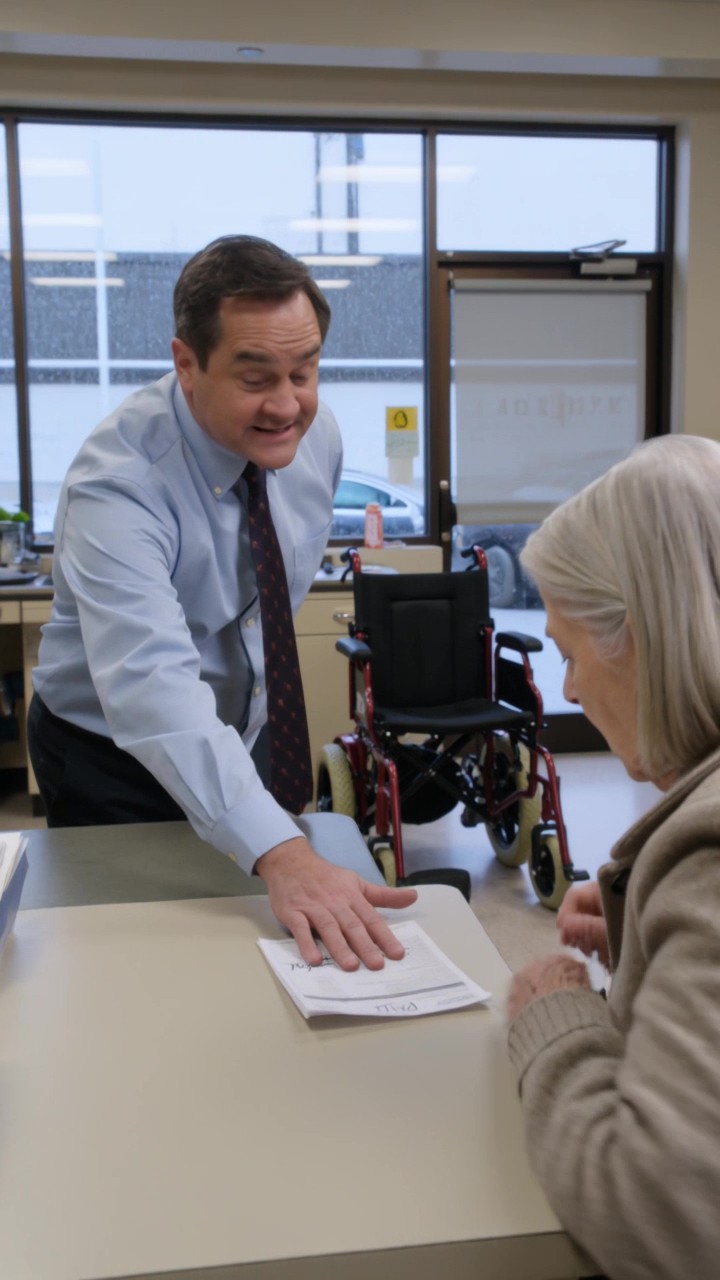
Charles Whitmore, the store manager, saw a poor elderly woman asking for an exception. He did not see a grandmother trying to keep a promise. He treated the unpaid balance as a character flaw.
The man in the delivery jacket heard enough.
His name was Daniel Ortiz. He owned a regional medical-supply logistics company and had come to sign for a shipment dispute. As a child, he had spent years in and out of hospitals after a spinal injury. He remembered many doctors and nurses. But one memory stayed separate: a cleaning woman holding an elevator during a storm when he thought everyone had forgotten him.
Daniel had kept the brass service-elevator key because the maintenance worker later gave it to him as a joke after the system was replaced. “Your elevator,” the man had said. Daniel kept it through college, surgeries, jobs, marriage, and the founding of his company.
When he saw Martha’s name on the repair intake form, he was not sure.
Martha Bell.
Harborview night cleaning.
The voice.
The phrase.
Then he heard her tell Eli:
“Doors are not cruel. People are, when they let them close too soon.”
That was close enough.
Daniel paid the bill anonymously because he did not want gratitude to become another burden for Martha. He also did not want Charles turning the moment into a promotion for the shop.
But anonymity did not last.
Eli found Daniel’s company name on the delivery sign-in sheet. Martha asked him not to chase the man with cameras or social media. Instead, Eli wrote a letter by hand.
My grandma got to my concert. She sat in the front row. She said someone made the wheels wait for her because she once made an elevator wait for him.
Daniel answered two weeks later.
He did not mention money.
He wrote:
Your grandmother was the first adult that night who treated waiting as something a child should not have to do alone.
The repair shop faced a complaint after Martha’s case reached the equipment supplier. The issue was not that every repair could be free. Shops needed payment, parts, and labor. The issue was Charles’s refusal to offer hardship options, his insulting language, and his attempt to turn Daniel’s payment into store goodwill.
The supplier required the shop to post information about payment plans, disability-equipment loaners, and local repair funds. Staff were trained to separate billing limits from humiliation. Charles lost customer-facing authority for medical-mobility cases and later resigned.
Martha did attend Eli’s concert.
The repaired chair hummed slightly louder than before. Eli spotted her in the front row and sang the first verse too softly because he was trying not to cry.
Afterward, Martha took the brass elevator key from her purse and let him hold it.
“Do you want to find him?” Eli asked.
Martha looked at the key.
“No. He already found the part he needed.”
“What part?”
“The part that remembered.”
Months later, Daniel’s company created a small emergency repair fund for mobility devices. He named it The Wait Fund, but he did not put Martha’s face on the brochure. The fund paid partial repairs when a chair, walker, or lift failed before insurance or charity systems could respond. It did not solve every case. It bought time.
Martha donated five dollars the first month.
Eli said they needed that money.
Martha said:
“We also needed the chair.”
She kept the brass key tied to the wheelchair armrest with a blue ribbon.
Not as proof that one good deed always returns.
Many good deeds do not.
She kept it because it reminded her that a small act can survive inside someone for decades, waiting for a day when it can finally move again.






Leave a Reply