
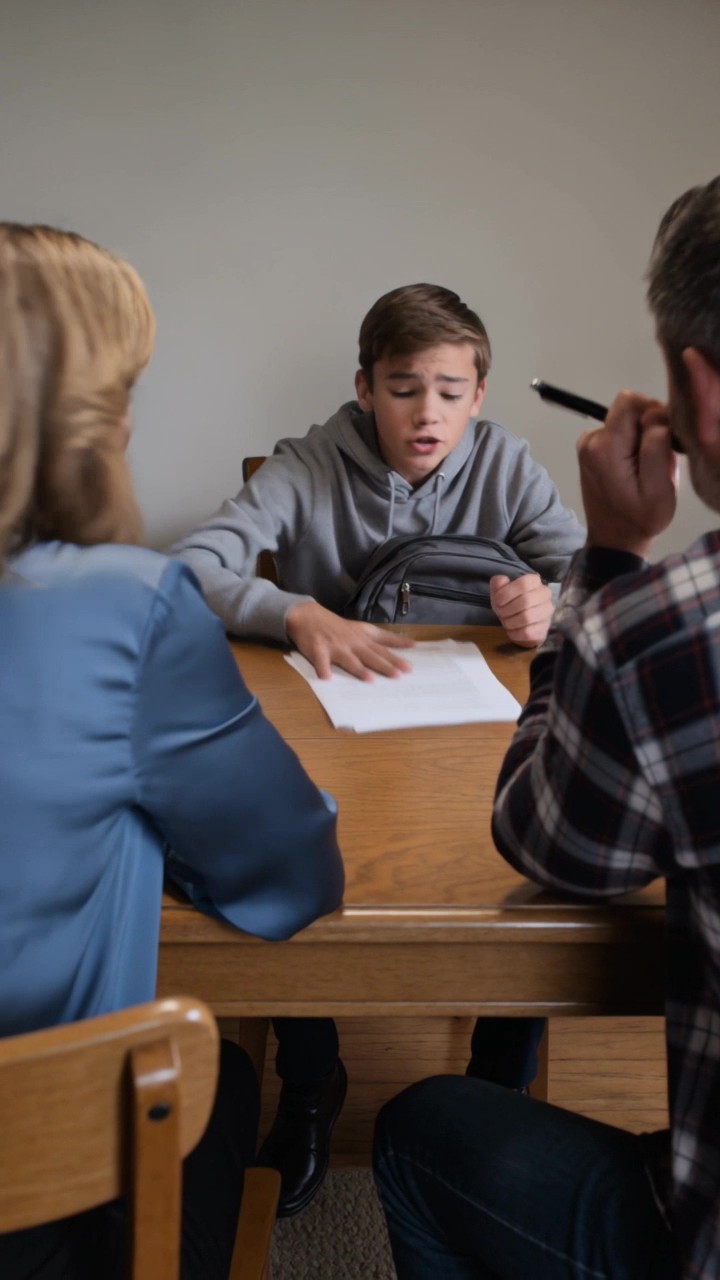
The judge ended the adoption hearing.
Noah had not rejected Daniel.
He had rejected the choice his mother created for him.
Outside the courtroom, Rachel admitted she had hidden Eric’s letters because she believed protecting Noah from repeated disappointment was more important than preserving Eric’s access.
Daniel understood her fear.
He did not support the secrecy.
“You asked me to become his father while removing information he needed to consent,” he said.
Rachel looked ashamed.
“I thought legal certainty would help him feel safe.”
Noah answered:
“Safety that depends on me not knowing is not safety.”
The family met with a counselor and attorney.
They created a different plan.
Daniel became Noah’s standby guardian and received authority for school and medical decisions with Rachel’s consent.
The adoption was withdrawn.
Eric’s letters would go through the counselor temporarily so Noah could decide when and how to respond.
Rachel was not required to trust Eric.
But she was no longer allowed to hide his attempts at contact unless a professional considered them unsafe.
Daniel worried Noah might see the withdrawn adoption as rejection.
Noah told him:
“You were there when I needed a father. A judge cannot make that more true.”
Daniel cried then.
Not because he lost.
Because he finally understood Noah was not withholding love.
He was protecting the right to define it.
Eric did not suddenly become reliable.
He missed one scheduled call and attended the next.
Noah remained cautious.
But the uncertainty belonged to him now, not to secrets created by adults.
Months later, Noah asked Daniel whether he regretted the courthouse.
Daniel answered:
“I regret thinking paperwork was the finish line.”
Noah smiled.
“What is?”
“Showing up tomorrow.”
Daniel did.





Leave a Reply