
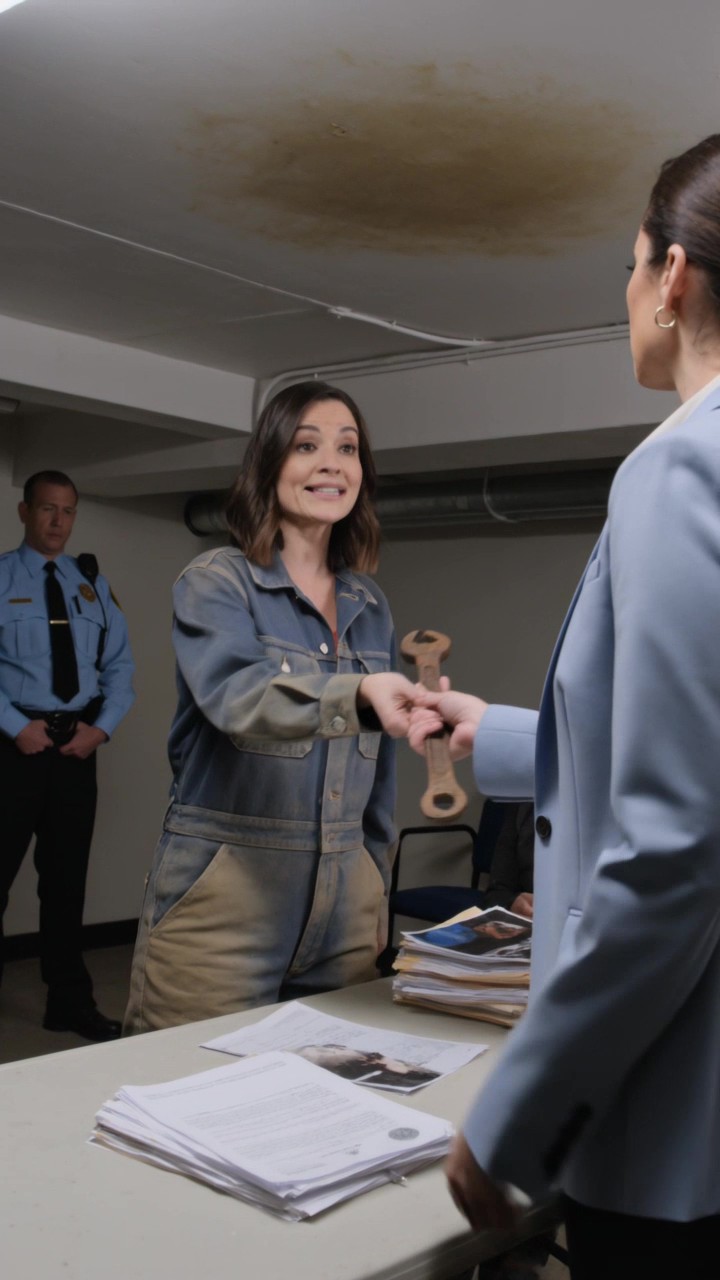
Leah Grant did not inherit a luxury empire.
Alder Court was one aging six-story apartment building with sixty-eight units, an unreliable elevator, old heating pipes, and rents that remained lower than the surrounding neighborhood.
It was also the largest asset her aunt Ruth had ever owned.
Ruth bought the building with two partners decades earlier.
Over time, the other partners sold their shares.
By the time she died, Ruth controlled seventy percent.
Leah inherited that interest and a difficult decision.
A development company offered to buy the building immediately.
The sale would make Leah financially secure.
It would also allow the new owner to renovate, raise rents where legally permitted, and remove tenants through non-renewals and construction vacancies.
Ruth’s records described Alder Court as stable.
Property manager Celeste Hart reported high maintenance compliance, low serious delinquency, and only a few “difficult long-term residents.”
Margaret Bell appeared in the file as one of them.
Repeated moisture complaints.
Refusal to remove buckets.
Unauthorized wall covering.
Resistance to inspection appointments.
Pending lease-enforcement action.
On paper, Margaret looked like a tenant creating the condition she reported.
Leah asked the management company to delay the eviction while ownership transferred.
Celeste said the process was too advanced and the apartment posed a liability.
Leah requested photographs.
The images showed plastic sheets and buckets.
They did not show anyone opening the ceiling.
Leah grew suspicious.
She could have arrived at the building in a suit and announced herself.
Instead, she asked a licensed plumbing company performing an unrelated boiler inspection whether she could accompany its owner as an observer.
The plumber agreed after Leah signed safety paperwork.
She borrowed clean coveralls that became muddy after they entered the basement crawlspace.
The choice to arrive anonymously had risks.
Employees should not be trapped by owners manufacturing secret tests.
Leah did not pretend to be licensed or perform technical work.
She listened.
In the boiler room, maintenance workers described recurring pressure loss on the fifth-floor heating loop.
One porter said brown water appeared near Margaret’s ceiling after every cold start.
He had submitted three work orders.
Celeste closed them after a handyman painted over the stain.
The porter stopped arguing because he feared losing his job.
Leah visited Margaret’s apartment with the licensed plumber.
The bedroom smelled damp.
A fan ran beside the wall.
Margaret slept in the living room because plaster had begun falling above the bed.
She kept every work-order number in a notebook.
The entries contradicted the management file.
Appointments had not been refused.
Two were canceled by maintenance.
One inspector never arrived.
The “unauthorized wall covering” was a plastic sheet taped beneath the leak.
Margaret asked Leah:
“Are you the plumber’s helper?”
Leah answered:
“Today, I’m here to understand what the building is doing.”
That was true.
Margaret invited her to the tenant meeting that afternoon.
Celeste planned to present the eviction as a health-and-safety measure.
When Leah entered in coveralls, Celeste treated her as labor outside the conversation.
The revealing moment was not merely rude.
It showed how information moved inside Alder Court.
Workers carried tools but were not allowed to interpret.
Tenants experienced damage but were treated as unreliable.
Management reports became the only language ownership heard.
The falling plaster ended that hierarchy in public.
The corroded heating pipe above the meeting room connected to the same fifth-floor loop running behind Margaret’s bedroom.
A pinhole leak had sprayed inside the ceiling cavity for months.
Pressure changes moved water along joists.
The conference-room collapse was not caused by Margaret’s apartment habits.
It came from the building system management had refused to expose.
After Leah signed the owner line, she did not fire Celeste in the room.
She secured the area.
Called emergency maintenance.
Moved Margaret into a safe hotel room paid by the property.
Ordered inspections of every unit on the heating loop.
And suspended the eviction.
The next day, an independent review began.
Celeste argued that anonymous ownership observation violated trust.
Leah agreed partly.
“I should not need coveralls to hear what employees and tenants already reported.”
Then she asked why reports had been altered.
The review found a pattern.
Celeste received performance bonuses tied to low maintenance spending and completed eviction targets.
Major pipe repairs would exceed the annual budget she had promised Ruth.
Instead of requesting capital funds, she classified several problems as tenant-caused moisture, housekeeping, or access refusal.
She did not steal repair money.
She protected her numbers by changing the explanation.
Ruth had accepted the reports.
Leah had to face that family responsibility too.
Her aunt cared about the building.
She also rewarded clean spreadsheets more than uncomfortable evidence.
The development company’s purchase offer assumed several long-term units would soon become vacant.
Emails showed Celeste had discussed pending enforcement actions with the buyer’s consultant before Ruth died.
No formal sale had been approved.
The expectation of vacancy had already begun shaping decisions.
Leah terminated the management contract.
Celeste lost her position after a formal process and retained the right to dispute portions of the findings.
Some tenants wanted her publicly humiliated.
Margaret did not.
“I want the pipe fixed, the record cleared, and nobody else told their bucket caused the rain.”
That became the priority.
The building replaced the damaged heating loop in stages.
Several ceilings opened.
Two families moved temporarily.
The work cost more than the annual maintenance reserve.
Leah used part of the inheritance and refinanced the property.
She rejected the highest development offer.
That did not make every financial problem disappear.
Insurance premiums rose.
The elevator required another major repair.
Some rents increased modestly under local limits after years without adjustment.
Leah held open budget meetings where tenants could see costs and challenge decisions.
Ownership remained ownership.
It did not become a fantasy of free housing without tradeoffs.
Margaret’s eviction record was withdrawn.
The management company issued a written correction to the tenant-screening database stating she had not caused the moisture condition or denied access.
The property reimbursed her damaged furniture, hotel costs, and part of the medical expense connected to respiratory irritation.
Money could not restore the months she slept beside buckets.
It acknowledged measurable harm.
Leah created a new maintenance system.
Work orders remained visible to tenants.
A manager could not close repeated leak, electrical, gas, or structural complaints without photographs and technician notes.
Porters could escalate issues directly to an independent building engineer.
Performance bonuses no longer rewarded low repair spending by itself.
They included verified response time and recurrence rates.
The licensed plumber hired the porter who had repeatedly reported the leak into a paid apprenticeship program.
He did not need to become secretly important for his warning to matter.
His proximity to the pipes was expertise.
Leah visited Alder Court weekly for the first year.
At first, tenants assumed every visit meant another surprise inspection.
She learned to announce herself.
Transparency had to follow the lesson of the coveralls.
Margaret invited her for coffee after the bedroom ceiling was repaired.
The room had new plaster and a visible access panel painted the same color as the wall.
Leah asked whether Margaret wanted the panel hidden more carefully.
“No,” Margaret said. “I like knowing someone can open it.”
That sentence changed Leah’s renovation plans.
The building added accessible service panels where recurring systems passed through walls.
Not beautiful.
Useful.
One year later, Leah spoke at a local housing forum.
Reporters called her “the heiress who went undercover as a plumber.”
She corrected them.
“I wore borrowed coveralls for one day. The workers wearing them every day had already reported the problem.”
She did not turn a costume into competence.
Her value in the story was not pretending to be poor.
It was using ownership power after listening to people management had trained itself not to hear.
Alder Court did not become famous.
It remained an old brick building.
The elevator still groaned.
Children still left bicycles near the rear stairs.
Margaret still complained when laundry-room hours changed.
That ordinary friction was proof residents had not been replaced by a polished story.
Leah kept the rusted pipe wrench in the management office.
It belonged to the plumber and had been retired after the handle cracked.
A tag beneath it read:
TOOLS CAN OPEN A WALL.
ONLY LISTENING OPENS THE REPORT THAT SAID THE WALL WAS FINE.
The true owner had entered in muddy clothes.
The important reversal was not that Celeste had insulted someone powerful.
It was that power finally stood beside the tenant whose evidence had been treated as disposable.







Leave a Reply