
Samuel Ortiz never claimed he taught Lily Brooks to read.
He could not explain every phonics pattern.
He did not design her intervention plan.
He did not administer assessments or determine grade-level progress.
The school reading specialist, Rachel Lane, did those things.
Celeste Hart, the celebrity tutor hired by the scholarship foundation, later helped Lily improve fluency and confidence in public reading.
Both women deserved credit.
Lily’s choice exposed a different kind of contribution.
Some children receive instruction during the school day and practice at a quiet kitchen table that evening.
Lily did not have a quiet kitchen table.
For almost two years, she and her mother lived in a one-room extended-stay motel beside the highway.
Her mother, Nina Brooks, cleaned offices in the municipal complex from 4:30 p.m. until 10:00 p.m.
Nina could not afford regular evening childcare.
Lily’s grandmother watched her twice a week.
On the other nights, Lily attended the public library’s homework program until it closed.
At first, the program ended at 7:00.
Nina’s shift ended three hours later.
A coworker usually collected Lily and took her to the office break room.
When the coworker became ill, the arrangement collapsed.
Nina considered leaving Lily at the motel with an older teenager from another family.
She did not feel comfortable doing that.
The library staff knew Nina was struggling.
They also had rules.
Children could not remain in the building without an approved adult after the homework program.
Employees could not privately supervise one child off the books.
The building was not a substitute childcare center.
Samuel worked the evening security shift.
He noticed Lily lingering near the entrance each night while Nina rushed from the office complex across the street.
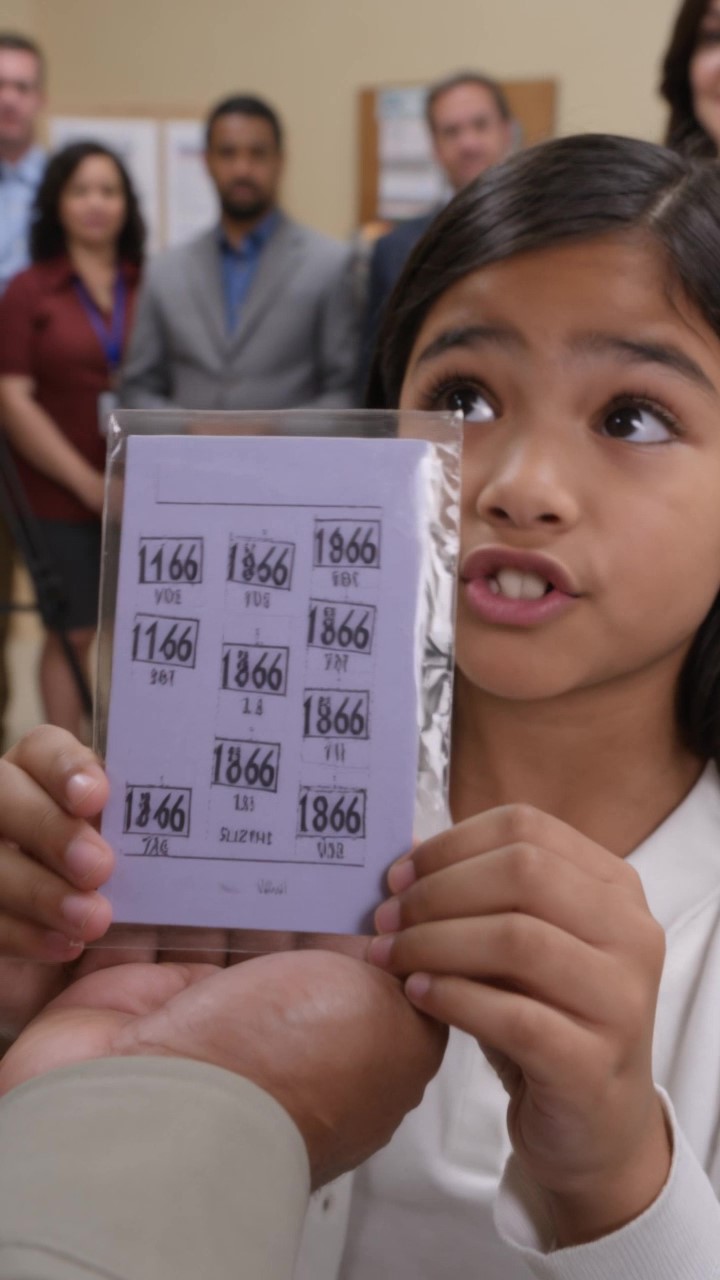
The child carried a purple library card in a cracked plastic sleeve attached to her backpack.
She checked out beginner books, then returned most of them unread.
Samuel asked why.
“The words move too slow,” Lily said.
He understood the feeling.
Samuel had left school early and earned his equivalency diploma as an adult.
He read well enough for work.
Long official documents still took him time.
He did not tell Lily that reading was easy if she practiced.
He said:
“Slow is still reading.”
The phrase became a routine.
While the library searched for a formal solution, Samuel used his dinner break in the public seating area before closing.
Lily read one page.
Then another.
Samuel did not correct every mistake.
He placed a small paper marker beneath the line so she would not lose her place.
If he did not know whether a word had been taught correctly, he wrote it down for Rachel Lane.
The next day, Lily carried the list to school.
Rachel responded with sound patterns and practice cards.
The adults did not compete.
They formed a rough bridge.
The larger problem remained the closing time.
Samuel could not simply keep the building open for Lily.
Doing so would create safety, staffing, and fairness issues.
Instead, he documented the repeated need and brought it to the library director.
He learned the city already funded a small evening-study pilot at another branch for children whose parents worked nearby.
The program included screened staff, registration, transportation coordination, and a final closing time at 9:30.
The pilot had unused capacity because families at Lily’s branch did not know about it.
Samuel helped Nina complete the forms.
The city added a shuttle stop between the two branches and the municipal complex.
Lily entered the program officially.
No secret key.
No employee breaking rules alone.
A system adjusted after one worker paid attention.
The purple card began collecting date stamps.
The library’s checkout machine printed ordinary transaction dates.
Lily asked Samuel to mark every night she finished ten minutes of reading.
He used a small black date stamp from the security desk’s lost-property log.
One stamp.
Then another.
Some evenings Lily read confidently.
Some evenings she cried.
She hated words with silent letters.
She hated when other children finished chapter books while she remained on the same page.
Samuel never promised she would become the best reader.
He said:
“You have to return tomorrow before today gets to decide what kind of reader you are.”
The card sleeve filled with dates.
When one side became crowded, Samuel began stamping the back.
By the time Lily reached third grade, 186 dates covered the plastic.
Rachel Lane’s intervention produced measurable improvement.
She worked with Lily in a small group four times a week.
Used structured lessons.
Tracked decoding, spelling, and fluency.
When the district added a grant-supported tutoring program, Celeste Hart joined as its public ambassador.
Celeste was a former television teacher with a successful educational company.
She visited Lily’s school twice a month and met students online in between.
Lily liked her.
Celeste taught her how to prepare before reading aloud:
Look at punctuation.
Mark difficult words.
Breathe before beginning.
During the spring, Lily read a full page at assembly without stopping.
The foundation selected her for its literacy scholarship ceremony.
The event title was:
THE TEACHER WHO CHANGED MY LIFE.
That wording created the conflict.
The foundation wanted a clear story.
A child struggling.
A famous tutor intervening.
A successful outcome.
The school mentioned Rachel Lane in the printed program as the staff specialist.
Samuel did not appear.
The library was invited to send one representative.
Its director was unavailable.
Samuel came directly from work because Lily asked him to bring the small black stamp.
At the auditorium entrance, event staff saw his uniform and assumed he was there for security support.
They directed him to the rear.
Samuel corrected them once.
“I am a guest.”
The coordinator checked the list.
His name appeared beneath:
Community support.
Not stage participant.
He accepted the seat.
He had never helped Lily for recognition.
That did not mean the story was fair.
Before the ceremony, Lily asked why Samuel stood at the back.
The principal said:
“Today is about your educational mentors.”
Lily answered:
“He is one.”
The principal believed she was speaking emotionally, not academically.
He told her to give the purple card to Celeste for the scholarship photograph.
Lily did not argue.
She waited until the stage.
Then she walked past.
Her choice embarrassed Celeste publicly.
That was not Lily’s goal.
She did not reject the tutor.
She defined the object correctly.
The purple card represented the place where practice happened.
It belonged in Samuel’s hands for the photograph.
After the ceremony, Celeste requested a private conversation.
She sat with Lily, Nina, Rachel Lane, Samuel, and the principal.
“Did you believe I wanted credit for all your progress?” she asked Lily.
Lily shrugged.
“The man with the microphone did.”
The adults looked at the principal.
He had followed the sponsor script without asking the child what the card represented.
Celeste turned toward Samuel.
“I did not know about the evening program.”
Samuel answered:
“That is the problem with stories where one person arrives at the end and gets called the beginning.”
Celeste accepted the sentence.
She did not become a villain.
She had never asked the school to exclude Samuel.
She had allowed a simplified narrative because it promoted a program she believed in.
That still carried responsibility.
The foundation revised the public caption:
Lily Brooks with Rachel Lane, her school reading specialist; Celeste Hart, her grant tutor; and Samuel Ortiz, the library security officer who connected her family to evening study and supported 186 nights of practice.
Nina’s role also appeared.
She had completed homework beside office-cleaning carts during her meal breaks, arranged transportation, and continued the work after exhausting shifts.
A child’s literacy story should not erase the parent who built the schedule around it.
The school removed the phrase “the teacher who changed my life” from future events.
Students could name multiple contributors.
Public recognition distinguished between professional instruction, practice support, family care, access, and funding.
The foundation also changed what it measured.
Tutoring grants began including transportation, extended study hours, and library partnerships.
The program had invested in excellent instruction while assuming children already possessed time and space to practice.
Lily’s story proved access was part of the intervention.
Samuel received an offer to become a paid evening-program coordinator.
He hesitated.
He liked security work.
He also worried that accepting the role would turn one relationship into a qualification he had not earned.
The library funded youth-program training.
Samuel completed it while maintaining part of his security schedule.
He became assistant evening coordinator.
He did not replace literacy specialists.
He managed attendance, transportation, safe pickup, room access, and the quiet routines that allowed instruction to continue.
Rachel Lane visited the program monthly.
Celeste funded new decodable books through the foundation without putting her photograph on every shelf.
Lily continued improving.
She never became the fastest reader in her class.
By fifth grade, she read independently and asked for extra time on complex tests when needed.
The support plan did not frame that accommodation as failure.
The purple library card expired when the city upgraded its system.
The library offered Lily a new digital card.
She accepted.
She kept the old one.
Samuel returned it after the ceremony.
“You said I should hold it for the picture,” he told her.
“The picture is done.”
Lily placed it inside a small frame at home.
The cracked sleeve and 186 stamps remained visible.
Years later, Lily volunteered at the evening-study program.
A boy became angry because she corrected the same word three times.
She stopped.
Remembered Samuel’s restraint.
And said:
“Let’s mark it for your teacher.”
The boy asked:
“Don’t you know?”
“Not every part.”
She wrote the word down.
That answer protected the child from bad instruction and protected her from pretending kindness made her an expert.
At Samuel’s retirement, the library displayed a copy of the purple card.
The original remained with Lily.
A plaque beneath the copy read:
INSTRUCTION TAUGHT THE WORDS.
ACCESS MADE ROOM FOR PRACTICE.
PRESENCE BROUGHT THE CHILD BACK TOMORROW.
Samuel disliked plaques.
He accepted that one.
Not because it called him the person who taught Lily to read.
Because it finally named the part he had actually done.







Leave a Reply