
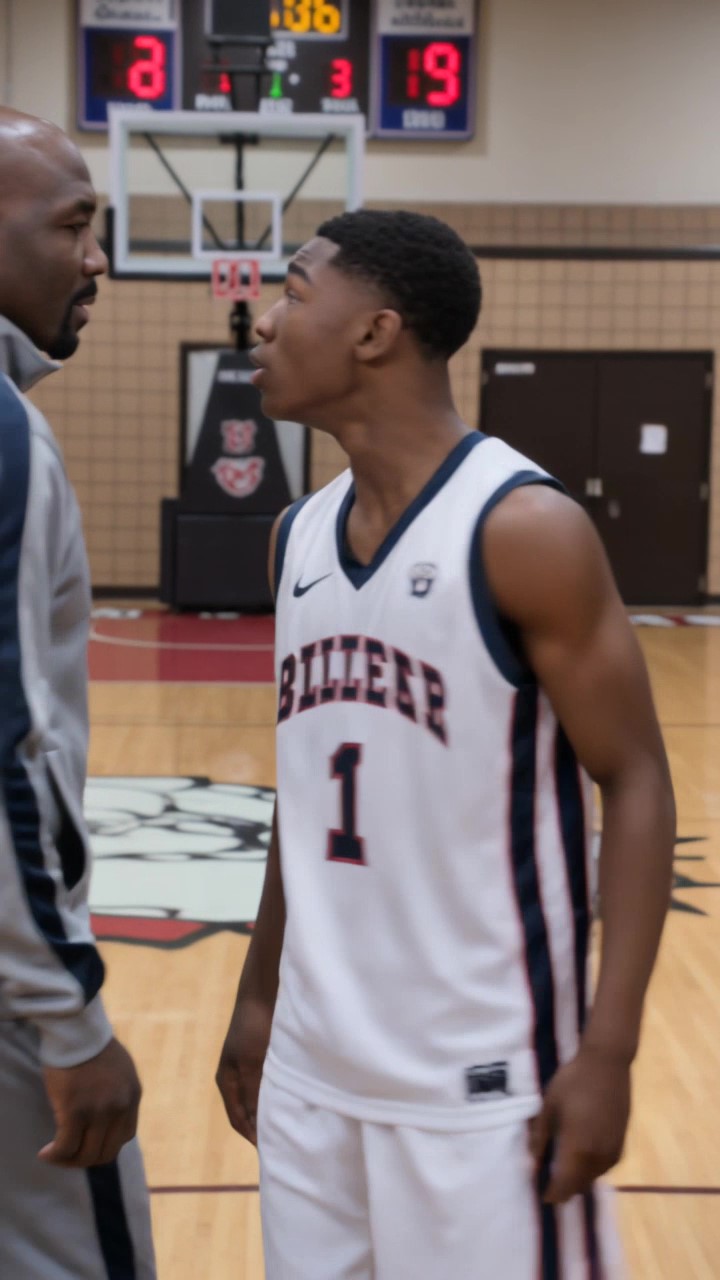
Westbridge High lost the final.
Noah Brooks lost the game-tape moment every scout expected.
Coach Marcus Reed lost his position for three weeks.
Nobody left the story untouched.
Noah had built his senior year around basketball. He was not a nationally famous recruit, but he had real interest from two small colleges and one Division II program. His family could not easily pay tuition. A scholarship mattered.
He had also been sick.
Three weeks before the final, Noah had fever, fatigue, and swollen glands. He missed two practices, then returned before lab results came back. His mother believed he had recovered from a virus. Noah did not tell her he still felt deep pressure in his left side after running.
The athletic trainer advised medical follow-up when the mono test returned positive. The school sent paperwork home. Noah signed the acknowledgment and told his mother the trainer had “cleared him if he felt okay.” That was not exactly what the paper said.
Teenagers with big dreams often hear permission where adults wrote caution.
Marcus noticed changes. Noah tired faster. He avoided contact drills. He held his breath after rebounds. When Marcus asked, Noah said he was saving energy for the final. Marcus wanted to believe him. The team needed him. Noah needed the scholarship exposure.
Marcus’s own history made him cautious. In college, he had played with a teammate who collapsed after a game following an abdominal injury. The circumstances were different, but Marcus remembered the helplessness of adults saying afterward that the signs had been subtle.
During the final, Noah played brilliantly for three quarters. Then he took a shoulder hit under the basket. It did not look severe. He stayed upright, made two free throws, and waved off concern. But on the next possession, Marcus saw him bend slightly, press under his ribs, and stare toward the scoreboard without tracking the ball.
Marcus called timeout.
The championship doctor performed a quick sideline check. Noah insisted he was fine. The doctor did not have imaging equipment in the gym. He said Noah’s vital signs were acceptable and recommended monitoring. Marcus asked the direct question:
“Can you rule out abdominal danger?”
The doctor answered:
“Not from here.”
That was enough.
Marcus benched him.
The decision looked unforgivable because the team lost by one. Parents screamed. Students accused Marcus of choking under pressure. Noah’s mother, Rachel, believed Marcus had punished her son for hiding an injury.
The college scout did close his folder. Later he explained he did so because the game had ended, not because he abandoned Noah. But from the bleachers, it looked like a door closing.
The next morning, the school board suspended Marcus pending review. The public complaint said he had made a unilateral medical decision over a cleared athlete. Marcus refused to defend himself by revealing Noah’s mono status publicly. Student medical information did not belong in the comment section.
Noah went home furious. That night, the pain worsened. Rachel took him to the hospital. Imaging showed an enlarged spleen and concerning signs that required strict activity restriction and monitoring. Doctors said he had avoided a dangerous outcome. They could not prove one more collision would definitely have caused severe rupture. They could say continuing contact play was unsafe.
That uncertainty mattered.
Marcus had sacrificed a game, reputation, and a child’s trust based on risk, not certainty.
At the board hearing, the physician explained the medical limits. A sideline evaluation could not clear what imaging later revealed. The doctor did not accuse Marcus of practicing medicine. He said Marcus made a conservative participation decision when medical risk could not be ruled out.
The suspension was lifted.
Noah did not immediately apologize.
He was relieved, humiliated, and angry at the same time. The final was gone. His teammates had cried in the locker room. He had thrown his jersey at the coach who may have saved him.
Marcus met him privately only with Rachel present.
“I should have pushed harder before the final,” Marcus said.
Noah looked up.
“You think I lied?”
“I think you were seventeen and scared of losing what you worked for. I’m the adult. I should have slowed it down earlier.”
That answer did more than self-defense.
It named the shared failure. Noah had hidden symptoms. The trainer’s warning had not been made clear enough to the parent. Marcus had watched signs and waited until the game. The school valued championship exposure. Everyone wanted the final to happen.
The college scholarship issue remained. Marcus contacted the scout and sent full-season tape with medical documentation, with Noah’s permission. The scout arranged a later workout after recovery. Noah did not receive the original offer he hoped for. He received a partial scholarship at a junior college with a strong transfer record.
It was not the dream version.
It was a future.
The school changed policy. Positive mono tests and other conditions involving internal injury risk required direct parent confirmation and physician clearance before return to contact play. Coaches could remove athletes for safety without being treated as forfeiting competitive duty, but those decisions triggered documentation and medical review. Championship pressure could not override incomplete health information.
Noah recovered slowly. For weeks he could not train. He watched classmates celebrate graduation while he tracked symptoms and medical appointments. That waiting period taught him more about identity than he wanted.
At the year-end banquet, he did not give a dramatic speech. He walked to Marcus with the same jersey he had thrown on the floor.
“I’m still mad about the final,” he said.
Marcus nodded.
“I know.”
Noah handed him the jersey.
“I’m also alive to be mad.”
The room laughed quietly, then applauded.
Marcus did not hang the jersey in a trophy case. He kept it folded in a drawer with the medical policy updates attached.
Because the lesson was not that coaches should ignore athletes’ dreams in the name of safety.
The lesson was that adults must protect the child even when the child hates them for interrupting the dream at the worst possible moment.




Leave a Reply