
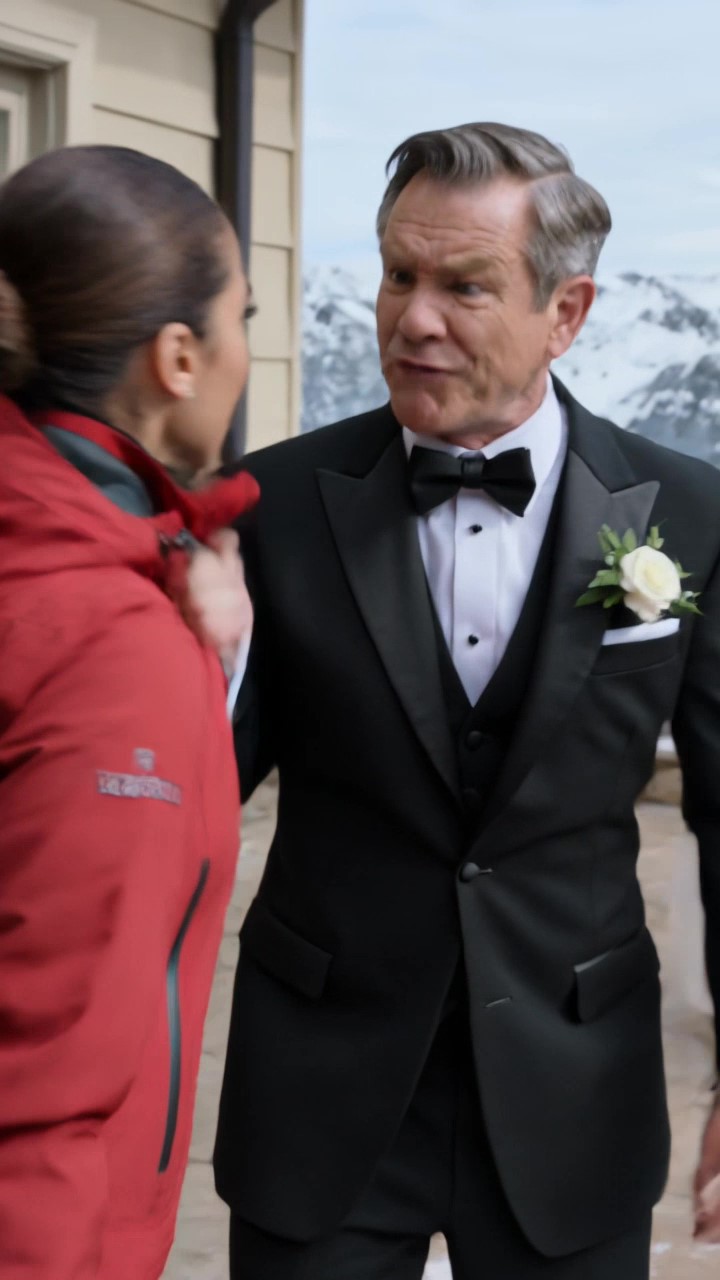
Everyone on the wedding terrace survived.
That was the truth the resort first wanted to put in the headline.
It was not the whole truth.
The avalanche buried the empty tent, destroyed the floral installation, damaged the terrace rail, and crossed the lower service road where a catering van had been moving supplies from the kitchen annex. The driver, Samuel Ortiz, was trapped for fourteen minutes before crews reached him. He survived with a broken leg, hypothermia, and months of rehabilitation ahead.
Rachel Cole’s decision saved the guests.
It did not save the day.
The Whitmore wedding had been planned for two years. The bride, Emily, postponed once because of her mother’s cancer treatment and again because of a resort construction delay. Her father, Charles, spent heavily on the mountain terrace, custom tent, imported flowers, and livestream equipment for relatives overseas.
The resort sold the terrace as safe winter luxury. Most days, it was. But that week had been unstable.
A storm dropped heavy snow over a weaker icy layer. The following morning, temperature rose quickly. Ski patrol closed two upper runs because of slab concerns. The wedding terrace sat below a run that was technically closed to skiers but still above an event area.
Rachel had argued that private events should not use the terrace that afternoon. The resort’s senior safety director wanted more data before canceling a premium wedding. The owner worried cancellation would bring refunds, lawsuits, and reputation damage. The compromise was increased patrol watch and a “ready-to-evacuate” status.
That phrase sounds decisive until someone has to decide what ready means.
Rachel watched the ridge from the patrol station. At 2:11 p.m., she saw a shooting crack near a cluster of pines. A crack does not always lead to a slide, but on that slope, under that sun, with guests seated below, it was enough.
She radioed for immediate evacuation.
The lodge asked for confirmation from the senior director, who was inspecting the lower access road. The event team hesitated because guests were already arranged, livestream was active, and the bride was inside the tent.
Rachel ran down to the terrace.
She could have tried to calmly persuade everyone to stand and walk out. But people often hesitate when instructions compete with social momentum. A wedding ceremony tells people to stay seated, smile, and wait for cues.
The tent was the cue holding them there.
Rachel cut the ropes.
It was not elegant. It damaged property. It frightened the bride. It turned a planned exit into confusion. But the collapsed fabric and shouting broke the spell. People moved.
Thirty seconds later, the slope released.
The slide was not the largest avalanche the mountain had seen. It was large enough. Snow, ice chunks, and broken tree branches crossed the terrace and buried the seating area. Had guests remained, injuries would have been severe.
The resort praised Rachel immediately, then stopped when the service-road radio call came through. Samuel’s van had been below the terrace, moving extra heaters and food trays. The slide crossed the road after hitting the terrace. Snow pushed the van sideways into a drainage ditch and packed around the doors.
Rachel joined the rescue after confirming the lodge evacuation. She helped probe the road edge and heard Samuel banging from inside. Crews dug him out. He remained conscious but in pain.
In the hospital later, Emily visited him in her mud-stained wedding dress. She cried before speaking.
“My wedding almost killed you.”
Samuel shook his head.
“The mountain did not ask whose party it was.”
That sentence became harder for the resort to control than any accusation.
The investigation found Rachel’s terrace evacuation was justified. It also found the resort had placed event revenue too close to uncertain slope conditions. The closed ski run should have triggered automatic review of any event below it. The lower service road should have been shut once the terrace entered ready-to-evacuate status. Staff responsible for catering and setup had not received the same avalanche updates as ski patrol.
Rachel was not blamed for Samuel’s injury. But she did not accept being celebrated as if the system had worked.
“At the moment I cut the tent, the plan had already failed,” she told investigators. “We were relying on one person seeing the slope before the mountain moved.”
The resort tried to offer the Whitmore family a replacement ceremony package. Emily refused the promotional version. She and her fiancé held a small legal ceremony in the hospital chapel garden two weeks later, after Samuel was stable enough to receive visitors but before he could walk unaided. He did not attend as a prop. He sent a note.
Charles initially wanted to sue Rachel personally for destroying the tent and ruining the wedding. After seeing the avalanche path report, he withdrew her name from the complaint and focused on the resort’s event-safety decisions. His anger did not vanish; it changed target.
The settlement covered Samuel’s medical costs, lost wages, and rehabilitation. It compensated the wedding family for canceled services but not for every emotional loss. No amount restored the original day.
The resort changed its policies. Event areas below closed avalanche terrain were closed automatically. Service roads were included in evacuation maps. Event staff received direct safety radios. A junior patrol lead could trigger a full venue evacuation without waiting for executive confirmation when visible slope failure appeared.
Rachel kept her job but declined the resort’s “quick-thinking hero” campaign. She agreed to teach in staff training only if the first slide showed the buried catering van, not the empty wedding chairs.
“Saving most people is not the same as a clean success,” she said.
Emily later sent Rachel a photograph from the small garden ceremony. On the back, she wrote:
I still hate that I lost the wedding. I know why you cut the ropes.
Rachel kept the card in her patrol locker.
Samuel returned to work the next season in a dispatch role, not as a delivery driver. His leg healed, but not fully. He used a cane on icy mornings. He joked about it more than he felt.
At the first winter safety meeting, he told the resort managers:
“I was not unlucky. I was left on a road your evacuation plan forgot.”
That line ended the silence in the room.
The difficult choice had saved the guests, damaged a dream, and failed to prevent every harm.
That made it more real, not less heroic.
Sometimes the right decision is not the one that leaves everyone grateful.
Sometimes it is the one that leaves enough people alive to argue about what should have been done sooner.




Leave a Reply