
Ruby’s flight did not decide ownership by itself.
Animals can prefer familiar people for many reasons.
A parrot landing on someone’s arm is not a legal document, a veterinary assessment, or proof that the person can provide lifelong care.
It did one important thing.
It stopped the Whitmore family from completing a decision while pretending Elena Morales had been only a cleaner who happened to know the bird’s name.
Margaret Whitmore bought Ruby from a licensed rescue placement twenty-two years earlier.
The parrot had already lived in two homes.
She disliked sudden movement, plucked feathers during stress, and screamed whenever rooms went dark without warning.
Margaret was patient.
She kept the cage beside the conservatory window.
Played classical radio in the afternoon.
Covered only half the cage at night so Ruby could still see the hallway lamp.
The routine helped.
Years later, Elena began cleaning Margaret’s city apartment three mornings a week.
She worked through a residential-service company.
Her assignment covered floors, laundry, bathrooms, and kitchen surfaces.
Animal care was not included.
Ruby disagreed.
The parrot threw food whenever Elena vacuumed.
Copied the sound of the vacuum switch.
Then began calling:
“Blue night!”
Elena asked Margaret what it meant.
Margaret showed her the blue towel used to cover the cage during evening medication.
Ruby had developed a seizure disorder.
The episodes were managed with veterinary care and a carefully measured oral medicine.
Margaret administered it at night.
Elena did not touch the medication.
At first.
Six years before Margaret’s death, the older woman began missing doses.
She forgot whether she had already filled the small syringe.
Sometimes prepared it twice.
Elena noticed because the medicine log contained repeated times and Ruby became unusually tired.
She contacted Margaret’s daughter Celeste.
Celeste arranged a neurologist visit for her mother and a new pill organizer.
She also asked Elena to remind Margaret about the bird.
“Do not take over,” Celeste said. “Mom needs independence.”
The request sounded reasonable.
Elena tried reminders.
Margaret became defensive.
Then frightened.
One evening, she called Elena after midnight.
Ruby had fallen from the lower perch.
Margaret could not remember the veterinarian’s emergency number.
Elena took a taxi across town.
She did not diagnose the bird.
She called the avian emergency service.
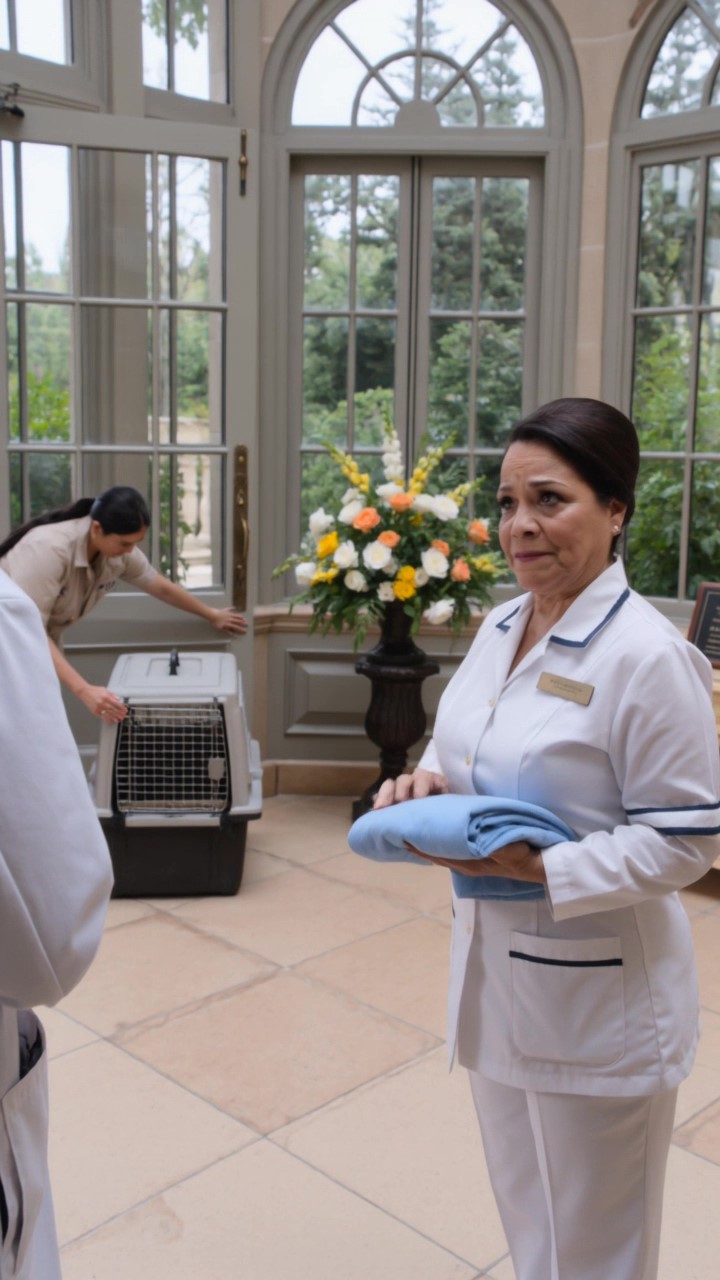
Placed Ruby in a towel-lined carrier.
And stayed while the veterinarian adjusted the treatment plan.
The veterinary clinic required one responsible person to maintain the medication record.
Margaret chose Elena.
Celeste remained the financial contact.
That division worked.
Celeste paid veterinary bills from Margaret’s account.
Elena administered medicine during scheduled visits and trained two home-care aides to do it when she was absent.
Margaret remained Ruby’s owner.
Elena became the person who made daily care reliable.
The blue towel changed meaning.
“Medicine first. Blue night. Elena stays.”
Elena repeated the sequence every evening:
Medicine first.
Blue towel after.
Hall light on.
I stay until you settle.
Ruby learned pieces of it.
Parrots imitate sound.
They also attach words to routines, people, and emotional states in ways that are not always simple language.
Nobody claimed Ruby understood a legal promise.
She understood the pattern.
When Margaret entered memory care, the apartment remained open for four months while the family decided what to do.
The facility did not allow large parrots.
Celeste planned to move Ruby to a respected avian sanctuary.
The sanctuary offered excellent veterinary support, social contact, and long-term protection.
It was not a cruel choice.
Elena asked whether Ruby could live with her instead.
Celeste refused.
Elena rented a two-bedroom apartment above a bakery.
She worked hotel housekeeping and evening office cleaning.
Celeste believed the schedule, income, and smaller space made the sanctuary safer.
She also worried Elena’s request was emotional and temporary.
Those concerns deserved evaluation.
The way she expressed them did not.
“You were paid to help my mother,” Celeste said. “That does not make you the bird’s family.”
Elena answered:
“Being paid does not make fourteen years imaginary.”
Margaret’s estate documents contained no direct gift of Ruby.
A parrot cannot be treated like furniture in practice, but animals remain property under estate law in many jurisdictions.
The will said personal items not specifically listed went to Celeste and her brother.
Celeste believed she had authority to choose the sanctuary.
Then the veterinarian found Margaret’s care directive.
It was not a formal pet trust.
It was a signed veterinary authorization completed eighteen months earlier while Margaret’s decision-making capacity remained documented.
The form stated:
If I cannot care for Ruby, Elena Morales should be evaluated first as long-term caregiver. If her home or finances cannot meet veterinary recommendations, Ruby should enter Green Harbor Avian Sanctuary.
The word evaluated mattered.
Margaret did not order the family to hand over the parrot without review.
She placed Elena first in the assessment.
Celeste had seen the document.
She interpreted it as one of several confused requests from her mother’s final period and did not send it to the sanctuary.
The veterinarian disagreed.
The form predated Margaret’s major cognitive decline.
Clinic notes recorded a clear discussion.
Margaret understood Ruby’s needs.
She knew Elena’s work schedule.
She wanted an objective home assessment.
At the memorial in the estate conservatory, Celeste planned a symbolic farewell before transferring Ruby to Green Harbor.
Elena arrived because Margaret’s former home-care aide told her the date.
She brought the blue towel and medicine box.
Celeste tried to remove her before the guests understood the dispute.
Then Ruby flew.
The parrot’s words exposed the depth of the routine.
The documents determined what happened next.
Green Harbor paused the transfer.
Its behavior specialist assessed Elena’s apartment.
The second bedroom could become a bird room with protected windows, safe materials, and appropriate perches.
The bakery’s exhaust did not enter the unit.
Elena’s work schedule was long, but she had already arranged an approved midday caregiver—the same retired home-care aide Ruby knew.
The larger problem was money.
African grey parrots can live for decades.
Specialist veterinary care is expensive.
Elena could afford ordinary food and housing.
A major medical emergency could overwhelm her savings.
Celeste assumed this proved the sanctuary was the only responsible choice.
Elena did not respond with pride.
She said:
“That is a real problem.”
The family, sanctuary, veterinarian, and Elena negotiated.
Margaret’s estate created a restricted veterinary fund using money already designated for animal and household expenses.
The fund did not pay Elena wages or rent.
It paid approved veterinary bills directly.
If Elena could no longer provide care, Green Harbor retained guaranteed placement.
The sanctuary conducted annual welfare check-ins for the first three years.
Elena completed avian-care training and emergency planning.
Ruby moved gradually.
First several daytime visits.
Then one overnight.
Then a week.
The parrot screamed during the first nights.
Called for Margaret.
Threw food at the unfamiliar wall.
Elena did not treat recognition at the memorial as proof that transition would be effortless.
Animals can choose a familiar person and still grieve another.
The sanctuary behaviorist helped adjust the routine.
Margaret’s recorded voice played once in the afternoon for several weeks, then less often when it seemed to increase agitation.
The blue towel remained.
The medicine remained.
Elena stayed.
Celeste visited after two months.
Ruby accepted a walnut from her but would not step onto her hand.
Celeste looked hurt.
Elena said:
“She is not judging the will.”
Celeste almost laughed.
That moment softened something.
They had both been using Ruby to carry human arguments.
Celeste wanted the sanctuary partly because it looked responsible and removed uncertainty.
Elena wanted Ruby partly because years of care had become love and because losing the bird felt like losing the final witness to her life with Margaret.
Neither motive was pure.
The welfare plan mattered more.
Celeste apologized for calling Elena only an employee.
Elena did not reject the word employee.
“I was an employee,” she said. “Your mother also trusted me. People can pay someone and still owe them the truth about what they became in the household.”
The estate memorial program was corrected.
It originally described Celeste as the daughter who “secured Ruby’s future.”
The revised version read:
Ruby’s long-term care was maintained by Margaret Whitmore, Elena Morales, home-care staff, Green Harbor Avian Sanctuary, and the veterinary team.
No single person became the secret savior.
The correction named the network.
Green Harbor also changed its intake process.
When families surrendered long-lived animals after an owner’s illness or death, staff asked:
Who performed daily care?
Who administered medication?
Who did the animal seek during fear?
Was there a paid worker, neighbor, or aide excluded from the legal family conversation?
Those questions did not guarantee placement with that person.
They prevented status from erasing relevant bonds.
Elena continued hotel housekeeping.
She did not become a wealthy animal influencer.
Ruby appeared in no viral channel.
The parrot lived in the second bedroom, complained whenever Elena folded towels, and learned the bakery delivery truck’s reversing alarm.
At night, Elena gave the medicine.
Covered half the cage.
Left the hallway lamp on.
Ruby’s phrase shortened with age.
“Medicine. Blue. Stay.”
Years later, Elena’s health changed.
She could no longer lift the large travel carrier safely.
Because the plan had included failure rather than pretending love made every problem solvable, Ruby transitioned to Green Harbor before an emergency forced it.
Elena visited weekly.
The parrot sometimes came to her immediately.
Sometimes preferred another bird.
Recognition did not become possession.
On the final visit before Elena moved to live near her sister, she brought the blue towel.
Ruby pressed her beak into it.
“Elena stays,” the parrot said.
Elena smiled.
“Not tonight.”
She placed the towel beside the familiar perch.
“Safe stays.”
The sanctuary worker recorded the phrase in Ruby’s care notes.
That was the full meaning of the memorial flight.
Ruby had not awarded herself to Elena forever.
She had revealed the person whose care had been removed from the family’s story.
Once that truth entered the room, everyone could build a plan based on the animal’s real life instead of the social rank of the people standing around her carrier.




Leave a Reply