
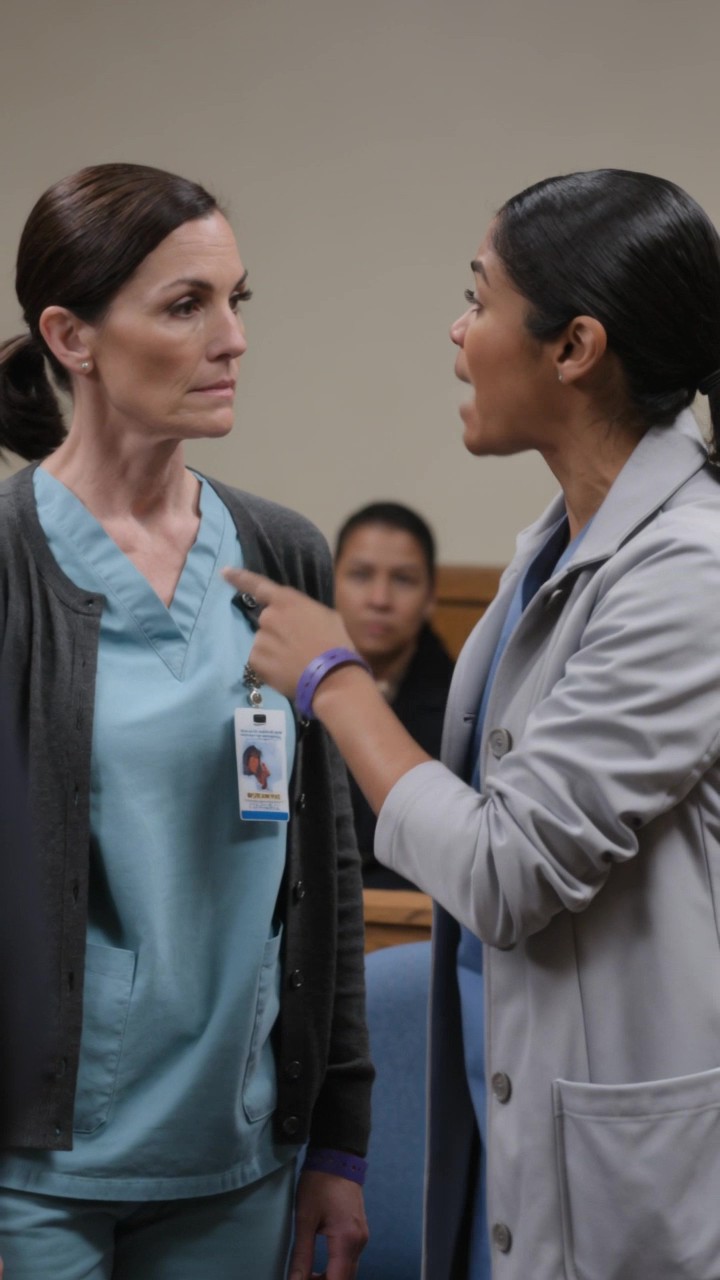
The courtroom closed to the public.
Phones were removed.
The judge ordered the doors secured.
Only then did the child advocate explain the purple wristbands.
Maya’s accident had not been random.
Her former boyfriend, Aaron Vale, had followed her car after she ended the relationship.
He drove aggressively behind her, blocked one exit, and forced her toward a median.
Police initially recorded the crash as loss of control during heavy rain.
Maya remembered almost nothing from the impact.
Aaron visited the hospital twice.
He brought flowers.
Spoke softly to the family.
Told everyone Maya had been exhausted and driving too fast.
Rachel believed him at first.
Then Noah said something strange.
“He was angry before Mom hit the wall.”
Rachel asked what he meant.
Noah described Aaron’s truck beside them.
The shouting through open windows.
The moment Aaron swerved toward their lane.
Rachel reported it to police.
A detective reopened the traffic footage.
One camera showed Aaron’s truck following the car.
Another showed him entering the hospital parking garage despite telling police he was out of town.
The investigation became sensitive.
Aaron had a relative working in private security who had accessed visitor information.
Police feared he might pressure Noah or discover where the child was staying.
A judge approved a temporary protection arrangement.
Noah could remain with Rachel.
His school transfer, counseling location, and safe address would stay sealed.
Rachel received the purple wristband during a hospital safety-planning session because Maya’s rehabilitation clinic shared a public entrance with several outpatient services.
If Aaron appeared, Rachel was to take Noah through a staff corridor marked by purple signs.
Maya did not know.
Doctors believed discussing the threat during early neurological recovery could worsen confusion and panic.
Police asked Rachel not to reveal the investigation until they secured additional evidence.
That request created the betrayal.
When Maya was discharged, she expected her son.
Rachel could not explain why reunification had to be delayed.
She said only:
“The court needs more time.”
Maya heard:
I do not trust you.
The family heard:
Rachel wants the child.
Aaron encouraged that interpretation.
He told Maya that Rachel had always believed herself more responsible.
He sent messages saying:
“She is using your injury to replace you.”
Rachel saw the messages during a supervised hospital visit.
She still could not correct the story.
If Aaron believed Noah was merely caught in a family custody dispute, he might reveal more of what he knew.
If he realized Noah was a protected witness, the child became more vulnerable.
Rachel accepted the role of villain.
She signed the guardianship petition.
Testified that immediate return would be unsafe.
Allowed her sister to believe the danger was Maya’s memory loss, not Aaron.
The cost was severe.
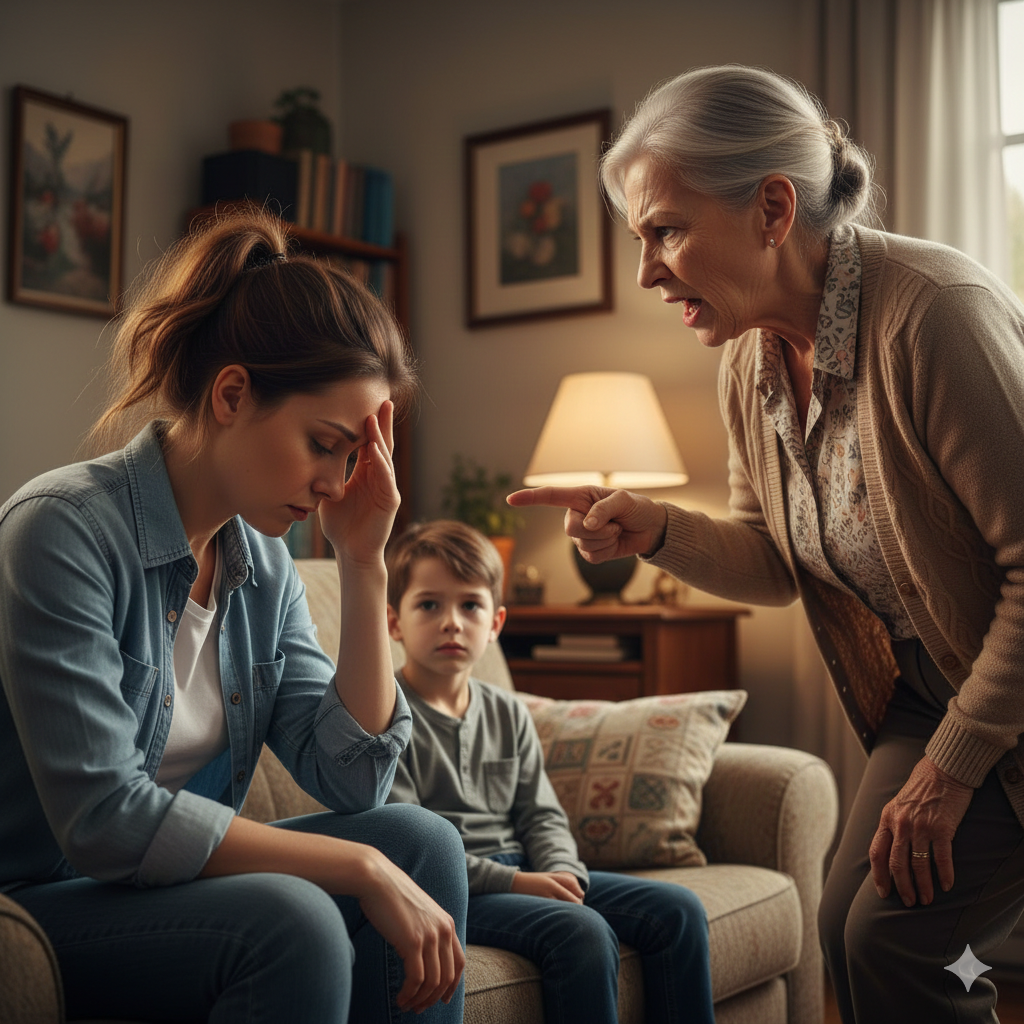
Their mother called Rachel cruel.
Maya refused every visit not required by the court.
Noah asked why his mother thought Rachel wanted to keep him.
Rachel answered:
“Because adults sometimes cannot be told the whole reason yet.”
The child hated the secrecy too.
He missed home.
He wanted to tell Maya what he saw.
The advocate helped him understand that waiting did not mean protecting Aaron.
It meant protecting the investigation and his own safety.
At the closed hearing, the sealed evidence was finally opened.
Traffic reconstruction showed Aaron’s vehicle forced Maya’s car toward the median.
A voice message recovered from his phone included a threat sent minutes before the crash.
Hospital access logs confirmed he searched for Noah’s visitor schedule through his relative.
Aaron had been arrested that morning.
The relative was under investigation.
The safety restriction could now be reviewed openly with Maya.
Maya sat without speaking.
The truth did not create instant gratitude.
It created a second wound.
Her sister had protected her son.
Her sister had also stood in court and described her home as unsafe without telling her why.
Maya looked at Rachel.
“You let me believe you thought I was a bad mother.”
Rachel nodded.
“Yes.”
“You watched me beg.”
“Yes.”
“Would you do it again?”
Rachel’s eyes filled.
“If telling you placed Noah at greater risk, yes.”
Maya turned away.
The judge did not expect reconciliation.
She focused on what happened next.
Maya’s medical team confirmed she could resume parenting with support.
Noah wanted to return home.
The protective order against Aaron remained.
Rachel’s temporary guardianship ended gradually over three weeks rather than immediately.
The purple wristbands stayed active until the new address and school route were secured.
Maya attended safety planning this time.
No secret decisions around her.
No information withheld beyond what law enforcement strictly required.
The family court criticized the protection process.
It had kept Noah safe but left no structured way to explain Rachel’s actions to the family without exposing the investigation.
Rachel received no legal advocate for the public accusations she carried.
The court created a confidential status statement for future cases:
A temporary guardian is acting under a verified safety directive. Details cannot yet be disclosed. The arrangement does not imply parental unfitness unless separately stated.
That sentence would not solve every conflict.
It would prevent protective secrecy from automatically becoming character assassination.
Maya returned home with Noah.
The first night was difficult.
He woke at 2 a.m. and went looking for Rachel.
Maya cried in the kitchen.
Not because he loved her less.
Because safety had become divided between two homes.
Rachel came when Maya called.
She did not take over.
She sat in the hallway while Maya helped Noah breathe through the panic.
The purple wristbands lay on the table.
Noah eventually removed his.
Maya kept it.
Months later, Aaron pleaded guilty to charges connected to the crash and witness intimidation.
The legal outcome did not repair the sisters.
That work took longer.
Maya asked Rachel to attend counseling with her.
In the first session, she said:
“I know why you did it.”
Rachel waited.
Maya continued:
“I am still angry you had to.”
That was the most honest forgiveness available.
Rachel did not ask for more.
At Noah’s next birthday, he tied the old purple wristbands around a small plant pot.
Maya asked why.
“So they stop being about hiding.”
The sisters planted lavender inside.
It grew slowly.
Some stems bent toward Rachel’s apartment window.
Others toward Maya’s kitchen light.
Protection had split the family for a time.
Truth did not erase the split.
It gave them a way to grow without pretending the betrayal had been real.


Leave a Reply