
The napkin sat inside the blue lunchbox like it had been waiting twenty-five years to ruin every simple answer.
Ethan could not touch it.
Rachel did.
Carefully.
With two fingers, like the paper might break if anyone breathed too hard.
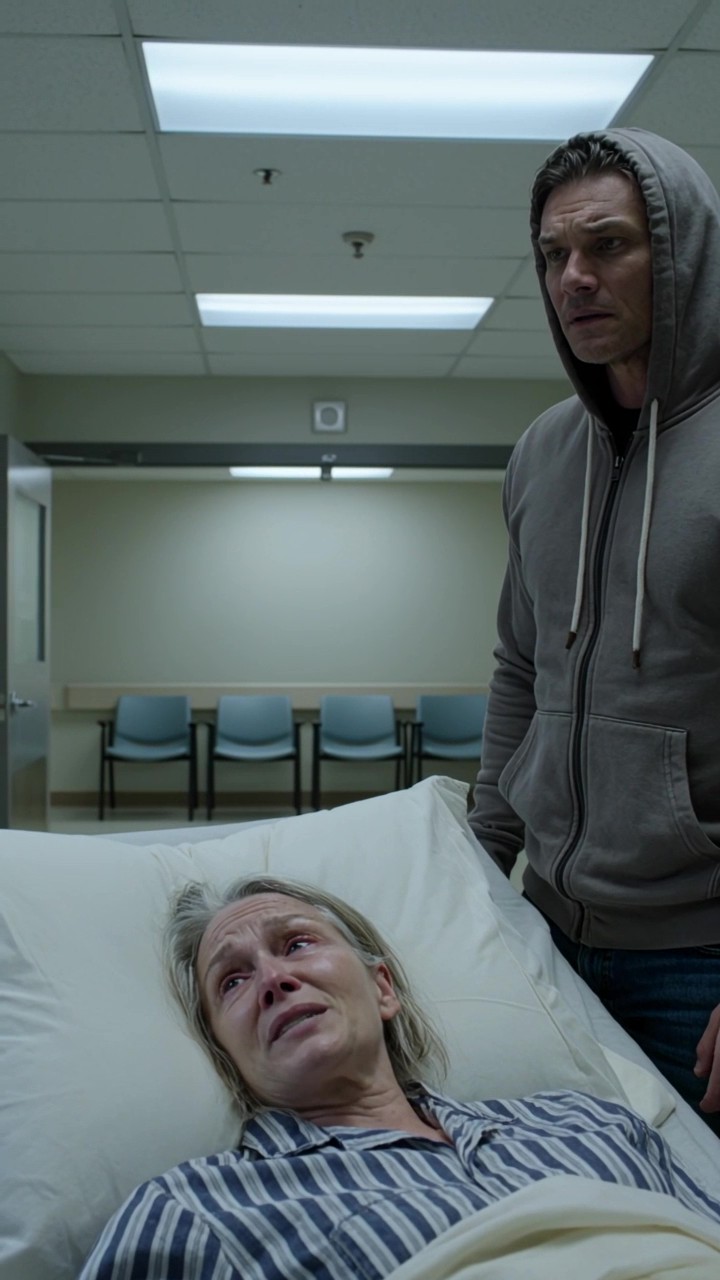
Frank Bell stood in the hallway, his old hands shaking.
“I’m sorry,” he said again. “I thought his aunt came. Your mother told us a woman from the family picked him up.”
Ethan did not look at Frank.
He looked at Diane.
She still faced the wall.
That made him angrier than if she had screamed.
“Turn around,” Ethan said.
Diane did not move.
“Turn around and look at me.”
Slowly, she did.
Her face was wet.
But Ethan had seen tears before.
Foster mothers cried when they sent him back.
Teachers cried when they read his file.
A caseworker cried once while telling him another placement had fallen through.
Tears did not raise a child.
Ethan pointed to the lunchbox.
“Did you write that?”
Diane nodded.
Rachel’s voice came out cold.
“Why would you leave a note telling him not to trust you?”
Diane stared at the blanket.
“Because I knew I might come back for the wrong reason.”
No one spoke.
That was the first honest thing she had said.
Ethan stepped into the room fully now.
Rachel followed, but stayed near the door.
Frank remained outside, as if he knew this was not his room anymore.
Diane took a long breath.
“When you were six, I was living with a man named Roy.”
Ethan’s face tightened.
He did not remember Roy clearly.
Only a smell.
Cigarettes.
Gasoline.
Anger.
Diane continued.
“He didn’t want you.”
Rachel folded her arms.
“So you abandoned your son?”
Diane flinched.
“Yes.”
The word was ugly.
Good.
It should be.
“I told myself I was leaving you somewhere public. Somewhere safe. I told myself someone would help.”
Ethan laughed under his breath.
“A bus station.”
Diane nodded, crying.
“A bus station.”
There was no defense in her voice now.
No softening.
No “I did my best.”
No “you don’t understand.”
Just the thing.
That made it worse.
And better.
She continued.
“I went back that night.”
Ethan looked up.
Diane swallowed.
“You were gone. The janitor told me a woman from child services had taken you. I panicked. Roy said if I tried to get you back, he would make sure they knew everything.”
“What everything?”
Diane looked at Rachel.
Then back at Ethan.
“That I had left you alone before. That I had no job. That I had stolen food. That I had slept in my car with you.”
Ethan said nothing.
“So I let myself believe you were better off.”
Rachel’s voice sharpened.
“No. You chose to believe that because it let you survive without him.”
Diane closed her eyes.
“Yes.”
Again, the honest word.
Ethan hated her for it.
He also hated that a part of him had wanted her to lie better.
Diane reached under her pillow with trembling fingers.
Rachel stepped forward automatically, protective.
But Diane only pulled out a small plastic bag.
Inside were photographs.
Not many.
School pictures.
Ethan at seven.
Nine.
Twelve.
Sixteen.
Copies.
Old.
Bent.
Some with water stains.
Ethan stared.
“You said you checked once.”
Diane nodded.
“I lied.”
Rachel’s face hardened.
Diane’s voice broke.
“I checked every year.”
Ethan felt the room tilt.
“How?”
“County records when I could. Online later. I never contacted you.”
“Why?”
Diane looked at him.
“Because every time I found you, I saw what I had already done.”
Rachel whispered:
“That is not an answer.”
Diane looked at her.
“No. It’s cowardice.”
The word stayed in the room.
Cowardice.
Not tragedy.
Not fate.
Not illness.
Cowardice.
Diane held the photos out.
Ethan did not take them.
So she placed them on the blanket.
“I don’t deserve your kidney,” she said.
Rachel looked startled.
Ethan did too.
Diane wiped her face.
“I asked because I was terrified. Then I saw you standing there, and I remembered the bench. I remembered your lunchbox. I remembered writing that note because I knew one day fear might make me selfish again.”
Her breath shook.
“And it did.”
Ethan sat down.
Not close to her.
In the chair by the wall.
His legs felt weak.
Rachel stood beside him.
Diane continued.
“I am not asking anymore.”
The monitor beeped softly.
Frank knocked on the doorframe.
“I should go.”
Ethan turned.
“Why bring it now?”
Frank lifted the lunchbox slightly.
“The station closed. Lost storage was being cleared. I saw the name inside. I searched. Found the hospital notice by accident through an old community post.”
He looked at Diane.
“I thought maybe this boy deserved one thing from that day that didn’t lie.”
Then he left.
The room became smaller.
Ethan looked at the napkin.
If I come back, don’t trust me.
Six words from the mother who knew herself better than anyone.
Rachel knelt beside him.
“You do not owe her your body.”
“I know.”
“Do you?”
He looked at her.
She was crying now.
Quietly.
“This is not like giving money,” she said. “This is not a visit. This is surgery. This is risk. This is your life too.”
Diane whispered:
“She’s right.”
Rachel looked at her sharply, not expecting agreement.
Diane nodded.
“She’s right.”
For the first time, the two women were on the same side.
Not forgiveness.
Not peace.
Just one line they both refused to cross.
Ethan rubbed both hands over his face.
“I spent my whole life thinking if she came back, I’d know what to do.”
Rachel touched his knee.
“And?”
He looked at Diane.
“She came back, and I’m still six.”
Diane made a sound like something inside her had finally broken.
“I’m sorry,” she whispered.
Ethan closed his eyes.
This time, the apology reached him.
Not because it fixed anything.
Because she did not attach a request to it.
No “but.”
No “please.”
No “I need.”
Just sorry.
A week passed.
Ethan did not get tested.
Diane did not ask again.
Rachel stayed angry.
Ethan stayed confused.
That was the honest order of things.
On the eighth day, Ethan returned to the hospital alone.
Diane was sitting up, weaker than before, watching rain slide down the window.
She looked surprised.
“You came.”
Ethan stood by the door.
“I’m not donating.”
She nodded.
“I know.”
“I need you to hear me say it.”
Diane’s eyes filled.
“I hear you.”
He took a breath.
“I am not doing it because Rachel stopped me.”
“I know.”
“I am not doing it to punish you.”
Diane swallowed.
“Okay.”
“I am not doing it because if I give you part of me, I don’t know how to keep the rest of me from becoming that little boy on the bench again.”
Diane covered her mouth.
This time, Ethan did not soften it.
“You left me once because you chose survival over me.”
The words shook, but they came.
“I am choosing survival too.”
Diane cried silently.
Then nodded.
“That is fair.”
Fair.
It was such a small word for such a large wound.
But it was true enough.
Ethan placed the blue lunchbox on the chair beside her.
Diane stared at it.
“I don’t want it,” she whispered.
“I don’t either.”
He looked at the dinosaur sticker.
“But it belongs to the truth.”
Inside the lunchbox, he had added something.
A photo.
Not of himself as a child.
Of him and Rachel standing in front of their small house.
On the back, he wrote:
I lived.
Diane picked it up with shaking hands.
Her face folded.
Ethan turned to leave.
“Ethan.”
He stopped.
“I don’t expect you to come back.”
He nodded.
“I know.”
“But if you ever want answers without giving me anything, I will tell them.”
He looked at her for a long moment.
Then said:
“Start writing.”
Diane nodded.
He left before she could say more.
Months later, Diane died.
Not dramatically.
Not with Ethan at her bedside.
Rachel asked if he regretted not going.
Ethan thought about it.
Then shook his head.
“No.”
Then, after a long silence:
“But I’m sad.”
Rachel held his hand.
Both things were allowed.
Sadness was not forgiveness.
Boundaries were not cruelty.
Blood was not a debt.
A package arrived two weeks after the funeral.
Inside were letters.
Dozens.
Diane had written until her hands were too weak.
Some pages were ugly.
Some cowardly.
Some honest.
Some useless.
Some necessary.
Ethan read them slowly over a year.
Not to rebuild her.
Not to excuse her.
To stop building his whole life around a blank space.
The blue lunchbox sat on a shelf in his garage.
Not as a shrine.
Not as a wound.
As proof.
One day, Rachel found Ethan standing in front of it.
“You okay?”
He nodded.
“I used to think the worst thing was that she never came back.”
Rachel leaned against the workbench.
“And now?”
He touched the faded dinosaur sticker.
“The worst thing was that I kept waiting.”
Rachel said nothing.
Ethan closed the lunchbox.
“I’m done waiting.”
Outside, rain started tapping on the garage roof.
The sound was close to the bus station in his memory.
But not the same.
This time, he was not on a bench.
He was home.
And sometimes healing does not look like forgiveness.
Sometimes it looks like closing the box, keeping your kidney, and finally walking away without being abandoned.




Leave a Reply