
The buyer had offered Travis ten thousand dollars if he persuaded Carol and two elderly neighbors to sell quickly.
A development company wanted to combine three units, renovate the floor and resell it at a much higher price.
Travis had not signed the private agreement.
But he had accepted a two-thousand-dollar “consulting advance.”
He used it to make one overdue mortgage payment on his own house.
Carol learned about the offer when the buyer called her rehabilitation room and assumed Travis had already explained everything.
He had not.
The next morning, Carol returned to Apartment 3C using a walker.
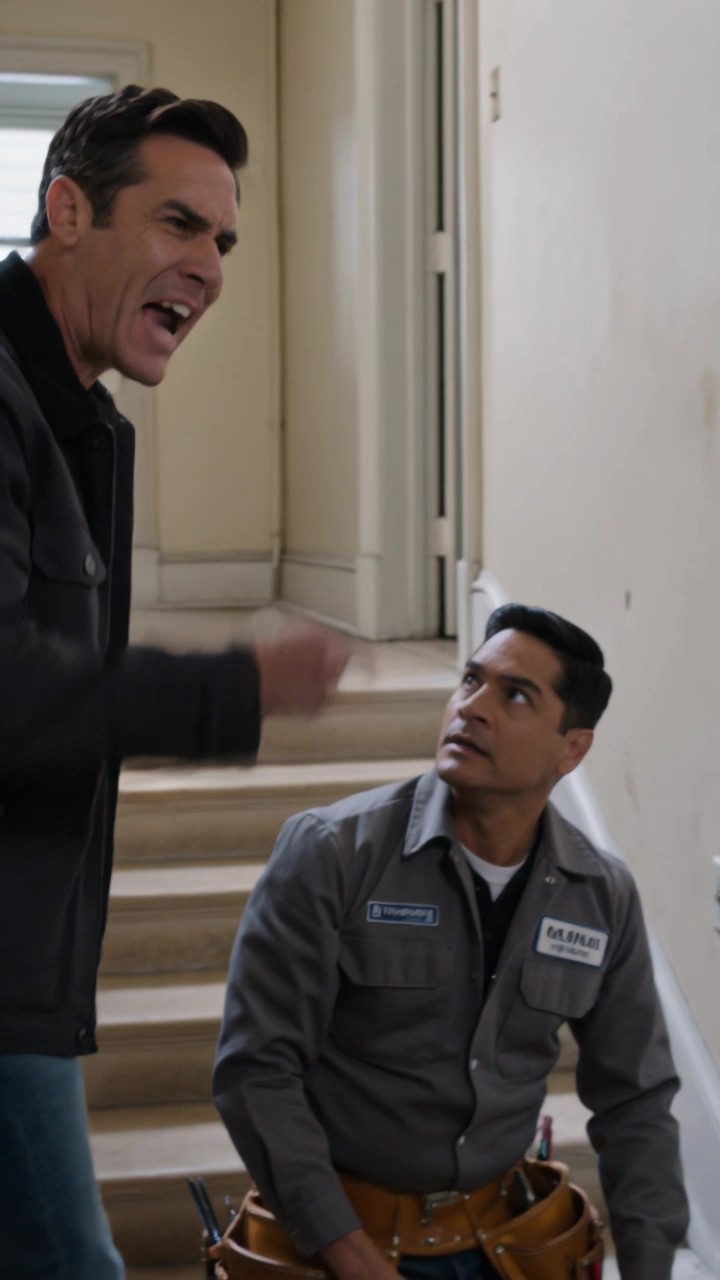
Miguel was there to check the lock.
Elena stood beside the door.
Travis waited in the hallway with his suitcase.
The neighbors expected shouting.
Carol only asked:
“Did you spend their money?”
Travis looked down.
“Some of it.”
“Return what remains.”
“I can repay the rest after I sell my truck.”
Carol nodded.
Then she held out her hand.
Elena placed the new key in it.
Travis said:
“I was trying to keep my family from losing everything.”
Carol looked at him.
“You decided my home was less important because mine was already paid for.”
“That’s not what I meant.”
“It is what you did.”
Travis’s eyes filled.
He reminded her of every appointment he had attended, every bill he had paid and every night he had slept in the chair beside her hospital bed.
Carol did not deny any of it.
“You helped me,” she said. “Then you began charging me for the help without telling me the price.”
That ended the argument.
Carol canceled the listing and reported the buyer’s private payment to the real-estate agency. The agent representing the company was dismissed for attempting to influence a family member who had no authority to sell.
Travis returned the remaining money and signed a repayment agreement for the portion he had spent.
Carol did not call the police.
Elena disagreed with that decision but accepted that the apartment still belonged to their mother—and so did the choice.
Travis moved his belongings into storage and stayed temporarily with a coworker.
For several weeks, Carol refused to let him inside.
He called every Sunday.
She answered only some of the time.
Elena managed the home-care schedule, but Carol made one rule clear:
“No one makes a decision about me in a room where I am not sitting.”
One month later, Travis arrived with groceries.
He waited in the hallway instead of using his old key.
Carol opened the door but did not invite him in immediately.
“I found a housing counselor,” he said. “I’m selling the truck, not your home.”
She nodded.
“I’m sorry.”
“I know.”
“Can I help with dinner?”
Carol looked at Elena.
Then back at Travis.
“You can carry the bags to the kitchen.”
It was not forgiveness.
It was one small responsibility with no hidden ownership attached.
Miguel’s new lock remained on the door.
Carol kept one key.
Elena kept the second.
No one else received one automatically.
Travis would have to earn access the same way everyone should:
by helping without treating gratitude as a debt that could be collected later.







Leave a Reply