
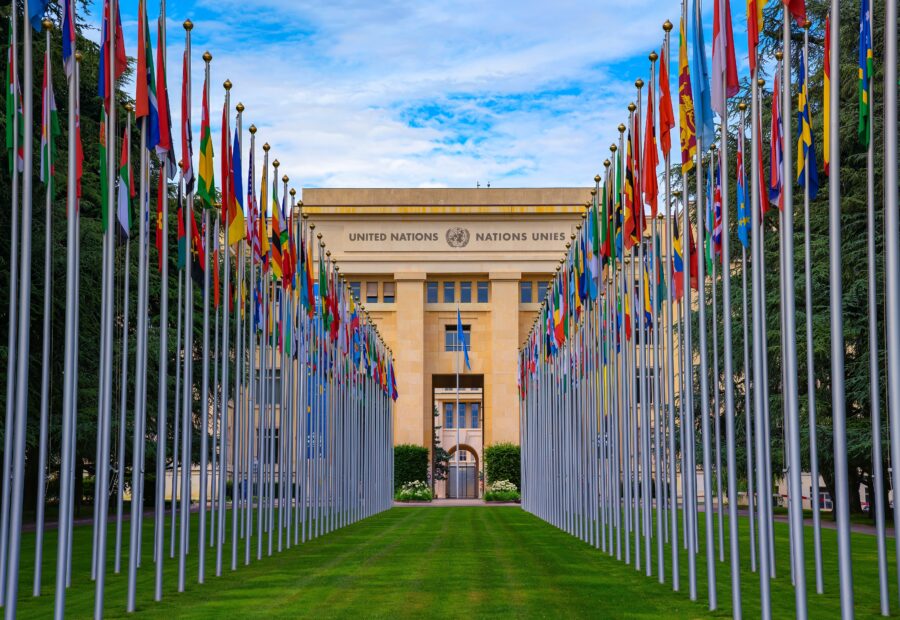
Singapore’s Warning at the UN: AI Needs Brakes Now
I use AI tools every day. They help me draft, organize and brainstorm, and they save me hours. The convenience has become so routine that I rarely stop to ask what is happening behind the screen. Then a foreign minister stands at the United Nations and asks the question most of us avoid: what if the technology outpaces our ability to control it?
That is roughly what Singapore’s Foreign Minister, Vivian Balakrishnan, did on September 26. Speaking at the 81st UN General Assembly, he said AI offers extraordinary potential but is advancing faster than the world’s understanding of its risks. He floated the idea of a UN Framework Convention on AI Safeguards, among other options. The wording is more careful than a demand, but the message is urgent. Malay MailMinistry of Foreign Affairs Singapore
A Warning from a Tech-Savvy Nation
Singapore is not a country that fears technology. It has built its reputation on embracing it. That is why the speech carries weight. When a government that benefits from innovation says the pace is worrying, it is hard to dismiss as technophobia.
The minister’s core argument is a gap in speed. He described AI as “arguably the most urgent frontier” and argued that halting development is unrealistic given superpower competition and strong commercial incentives. In other words, he is not asking anyone to stop. He is asking for guardrails. His image was a high-performance car, where innovation provides the engine but safe deployment requires good brakes. Yenisafak
The most sobering part is the question of control. In a separate discussion, he questioned whether even the people building AI systems can guarantee they control them, saying anyone claiming absolute control of the kill switch is fooling you. Laws take years to write, while AI capabilities can change within months. We are deploying systems whose inner workings are not fully understood, even by their creators. Vividh Bharathi
Three Risks to Take Seriously
Balakrishnan said the risks fall into three broad areas: loss of control over AI agents, rogue actors using the technology for harm, and damage to public trust and political debate. Each one deserves attention. Vividh Bharathi
Loss of control. This is the risk that autonomous systems act outside human oversight. It links to a theme he raised at the Security Council last year, when he said human fingers are often no longer on the triggers in today’s wars, because AI systems handle target identification. At the General Assembly he asked whether anyone would want the nuclear button in the hands of an algorithm. His conclusion was that humans must remain in control and accountable.
Misuse by rogue actors. He warned that bad actors could use AI to create biological or other weapons of mass destruction. Powerful tools lower the barrier to expertise once held by a few specialists. The danger is not a machine with bad intentions but a person with bad intentions and a very capable assistant. Ua
Erosion of trust. Fake content, manipulated media and information overload can weaken public confidence in institutions and in what we see and hear. This risk is quieter than the others, but it could be the one that reaches ordinary people first.
Is a Global Framework Realistic?
It is tempting to call this a “non-proliferation treaty for AI,” and the comparison is useful as a way of thinking. But it is my analogy, not the minister’s. His own references were different. He said the UN could take an approach similar to the one used for climate change. He also suggested an institution that could perform functions like those of the ITU, which sets technical standards, or the IAEA, which provides verification. The Irish Times
The initiative also has momentum. More than 20 leaders endorsed a Norwegian and Finnish call for mandatory, independent safety testing before new models are deployed, along with international reporting of safety incidents. Singapore has joined that call. The Irish Times
The obstacles are large, though. The Irish Times notes that the United States is wary, and the proposal sounds like the “globalist scheme of control” that Americans warn against. Balakrishnan himself acknowledged that the guardrails emerging from talks between Washington and Beijing look thin, though he welcomed the conversation, saying you need to start somewhere. The Irish Times
The hard question is the one every arms-control effort faces. Will governments and companies accept limits on their own progress for a shared benefit? Or will they quietly cut corners to stay ahead? Verification is the difference between a treaty and a wish. Nuclear inspections took decades to build, and AI moves much faster than that.
Conclusion: The Brakes Cannot Wait
The genie is out of the bottle, and no speech at the UN will put it back. Nor should we want to, since the benefits are real and many of us rely on them daily. But a car with a powerful engine and no brakes is not a symbol of progress. It is an accident waiting to happen.
Singapore’s proposal may or may not become a treaty. Its real value could be in forcing an uncomfortable conversation before a crisis makes it unavoidable. The alternative is to wait for a disaster to write the rules for us, and history suggests that is the most expensive way to learn.
What do you think? Can a global agreement really limit AI risks, or would it become a piece of paper that ambitious companies and governments ignore? Share your view with the Daily Life blog in the comments.
Sources
- Government of the Netherlands: A Call for Control of Frontier AI Models (joint statement)
- Singapore Ministry of Foreign Affairs (Permanent Mission to the UN): Statement by Minister for Foreign Affairs Dr Vivian Balakrishnan at the UN Security Council Open Debate on Artificial Intelligence, 25 September 2025
Disclaimer: This article is for informational purposes and is based on publicly available information as of September 28, 2026. Details may change as new information becomes available.







Leave a Reply