
A Simple Question With a Surprisingly Simple Answer
Sometimes, a child can ask a question so simple that it leaves adults completely stumped: What does the “T” in “T-shirt” actually stand for?
Most of us have worn T-shirts for practically our entire lives. We buy them, wash them, fold them, sleep in them, exercise in them, and probably have several sitting in a drawer right now. Yet despite how familiar this everyday piece of clothing is, many people have never stopped to wonder where its name came from.
The answer is much simpler than you might expect—and once you see it, you probably won’t forget it.
The “T” Comes From the Shirt’s Shape
Contrary to some guesses, the “T” isn’t short for “textile,” “training,” “top,” or any other hidden word.
It refers to the shape of the garment itself.
Take a basic short-sleeved T-shirt and lay it completely flat on a bed or table. The torso creates the long vertical section, while the two sleeves extend horizontally from either side.
Look at the entire garment from above and you’ll see it: a capital letter T.
That’s essentially the idea behind the name.
It’s one of those everyday facts that seems incredibly obvious once someone points it out, yet it can go unnoticed for decades.
Why Is It Called a T-Shirt Instead of Just a Shirt?
“Shirt” is a broad term covering many different garments. Dress shirts, button-down shirts, polo shirts, and long-sleeved shirts can all fall into that category.
The classic T-shirt, however, has a particularly recognizable construction.

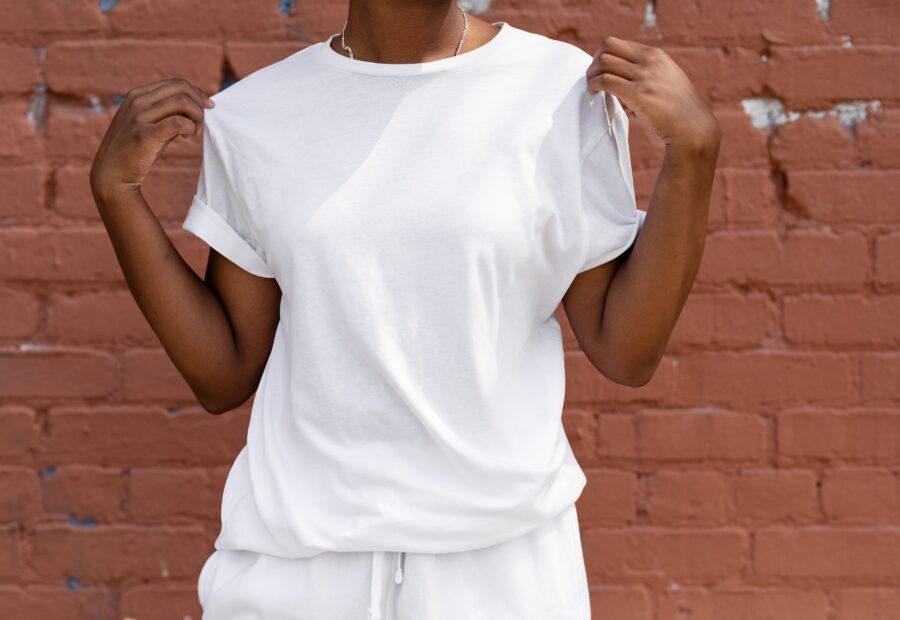
It generally has a simple body, short sleeves extending from the shoulders, and no full row of buttons down the front. Many traditional versions also feature a round or crew neckline.
That uncomplicated construction gives the garment its distinctive T-like silhouette when laid flat.
So rather than being a mysterious abbreviation, the name is basically a visual description.
T-Shirts Weren’t Always Everyday Fashion
Today, wearing a T-shirt by itself is completely ordinary. But the garment wasn’t always viewed as the casual fashion staple we know today.
Early versions were closely associated with undergarments and practical work clothing. Their lightweight construction made them comfortable, relatively easy to wash, and convenient for people doing physically demanding jobs.
Military use also contributed to the garment becoming familiar to large numbers of people. Simple undershirts could be worn beneath uniforms and were much more practical in warm environments than heavier layers.
Eventually, the humble undershirt began moving out from underneath other clothing.
Workers could wear one while performing manual labor. People could put one on around the house. As social attitudes toward casual clothing changed, wearing a T-shirt without another shirt over it became increasingly acceptable.
And then popular culture helped turn it into something much bigger.
How the T-Shirt Became Cool
By the middle of the 20th century, the plain T-shirt was increasingly visible in American popular culture.
Film stars helped transform the simple white shirt into a symbol of youthful, effortless style. Instead of looking like underwear, a fitted T-shirt could suddenly communicate confidence, independence, and rebellion.
From there, the possibilities expanded dramatically.
Companies discovered that T-shirts could carry advertisements and logos. Bands used them as merchandise. Sports fans wore shirts supporting their teams. Political movements printed messages across them. Tourists bought them as souvenirs.
The T-shirt became more than clothing.
It became a blank canvas.
Why T-Shirts Are Still Everywhere
Fashion trends constantly change, but the basic T-shirt has remained remarkably resilient.
One major reason is versatility.
A plain T-shirt can be worn with jeans for an everyday outfit, paired with shorts in warm weather, used for exercise, worn underneath a jacket, or combined with more formal pieces for a smart-casual look.
There is also almost no barrier to wearing one.
Children wear T-shirts. Teenagers wear them. Adults and seniors wear them. They are produced in countless sizes, fabrics, cuts, colors, and price ranges.
You can buy an inexpensive multipack of basic shirts or spend hundreds of dollars on a designer version—and fundamentally, both garments still follow the same familiar T-shaped concept.
A Simple Folding Hack
Once you know where the name comes from, the shape can even help you remember an easy way to organize your shirts.
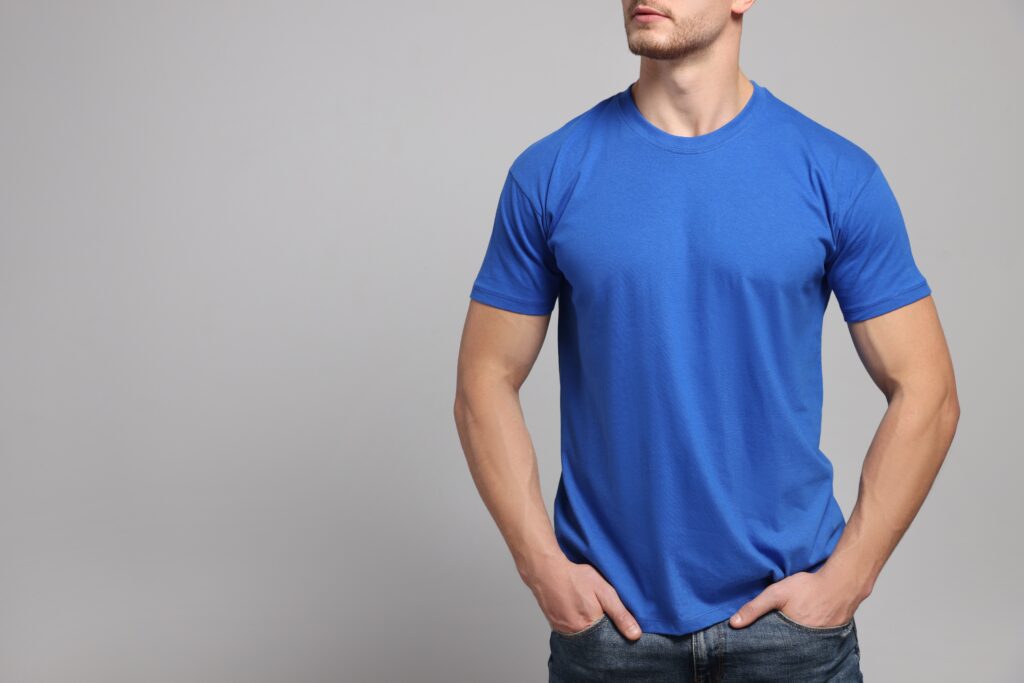
Before folding a T-shirt, lay it completely flat and smooth the sleeves outward so you can clearly see its “T” shape.
Fold each sleeve inward toward the center, creating a long rectangle. Then fold the bottom upward once or twice depending on the size of your drawer.
For drawer storage, placing folded shirts vertically rather than stacking them can make it easier to see each shirt without digging through the entire pile.
It’s a small organizational trick inspired by the same simple shape that gave the garment its name.
One Everyday Word, One Interesting Story
The most entertaining part of this little fact may be how obvious it feels afterward.
We use hundreds of familiar words every day without thinking about where they originated. Sometimes it takes a surprisingly simple question—often from a child—to make us realize we’ve never actually considered the answer.
So, the next time someone asks, “What does the T in T-shirt stand for?”, you have an easy answer:
It doesn’t represent a secret word.
The “T” refers to the garment’s shape.
Lay a classic short-sleeved shirt flat, stretch the sleeves outward, and you’ll immediately see the capital letter T.
Sometimes the best life hacks aren’t complicated tricks at all. They’re simply small pieces of everyday knowledge that make you look at familiar things a little differently.
Sources
Disclaimer: This information is for reference purposes only.







Leave a Reply